


PRESENTATION
A River That Shapes the Whole Journey
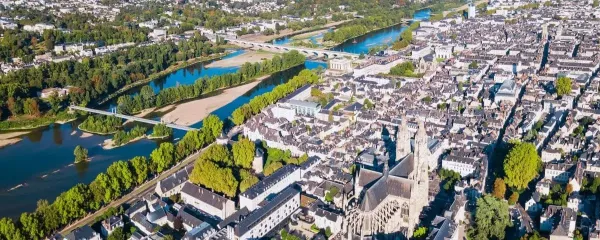
The Loire Valley is best discovered as a long journey following a river. The Loire flows through very different landscapes, yet it always plays the same role, connecting towns, castles, villages, vineyards and walking paths. It is the perfect guide, because by following the river, you gradually begin to understand the identity of this part of France.
The scenery changes constantly without ever losing its sense of unity. In some places, the Loire feels wide, peaceful and almost wild, with sandy islands, gentle banks and a very distinctive light. Elsewhere, it runs alongside pale stone facades, old residences, bridges, gardens and villages perched on the hillsides.
This valley is much more than a collection of famous monuments. It is a cultural landscape where history, water, ancient routes and human activity all interact. Part of the Loire Valley is listed as a UNESCO World Heritage Site, which helps explain its importance. Here, the river is not just a backdrop, it is the backbone of the region.
The best way to explore it depends on your pace. You can plan a classic trip around the major castles, choose a slower itinerary by bike, or combine cities, villages and natural landscapes.
Castles, Historic Towns, and Villages
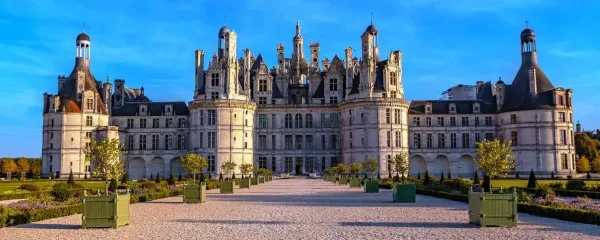
The Loire Valley is famous around the world for its castles, and the reputation is well deserved. Chambord impresses with its size and spectacular architecture. Chenonceau stands out with its elegant silhouette stretching across the water. Blois brings together several historical periods within a single monument. Amboise recalls the kings of France, but also Leonardo da Vinci.
These castles are all different. Some reflect royal power, others court life, private elegance, military defense or the art of garden design. For you, the real appeal lies in experiencing that variety.
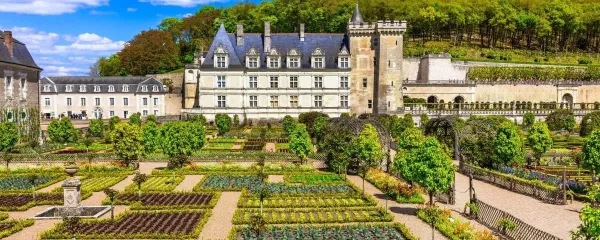
The gardens are another of the region’s great treasures. Some are closely linked to the castles, such as those at Villandry and Chaumont-sur-Loire, where landscape itself becomes a form of art. They provide a pleasant contrast to visits inside historic buildings and make the trip more varied, especially in spring, summer and early autumn.
The towns also play an essential role. Orléans, Blois, Tours, Saumur and Angers each tell a different story. Some are associated with kings, others with merchants, wine or the traditional boats that once navigated the Loire.
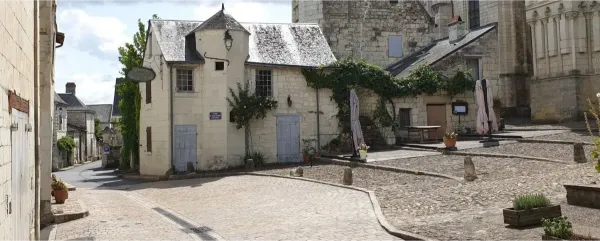
The villages are equally important if you want to avoid seeing the Loire Valley as just a collection of monuments. Candes-Saint-Martin, Montsoreau, Montrésor, Lavardin and many other small communities offer a slower pace. Here, you can appreciate the local materials, narrow streets, viewpoints and the close relationship between stone, river and countryside.
Nature and Cycling
The Loire Valley is also a destination for outdoor activities. The Loire à Vélo route follows the river for long distances and includes sections suitable for different levels of experience. Even if you’re not a serious cyclist, you can simply choose a short stage between two towns or castles. It is often one of the most enjoyable ways to experience the valley, because the landscape reveals itself gradually.
Nature extends far beyond the banks of the Loire. Sologne offers forests, ponds and a more secluded atmosphere. Farther south, the Brenne is a vast land of water and birdlife. To the west, Anjou adds landscapes of vineyards, rolling hills and villages built from pale stone.
OVERVIEW
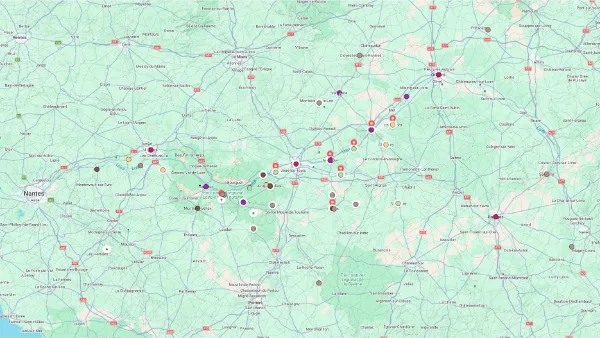
Map