


INTERACTIVE MAP
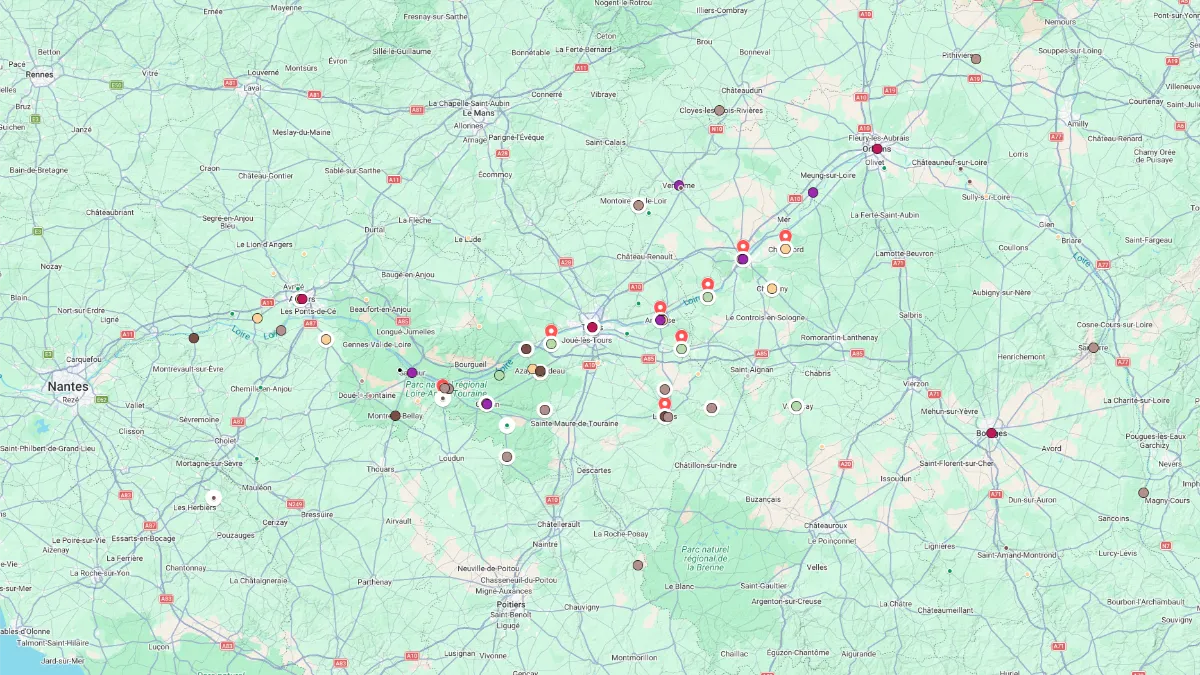
Click on the icon  in the top-right corner to view the map in full screen.
Show/Hide layers as needed.
After clicking on the image,
click on the icon  in the top-left corner to display the map legend.
Show/Hide layers as needed.
CITIES
Overview Table
| Name | Top Picks | Exp. Picks | Population |
|---|---|---|---|
| Bourges | 65 000 | ||
| Orléans | 115 000 | ||
| Tours | ☑️ | 140 000 | |
| Angers | 160 000 |
Bourges
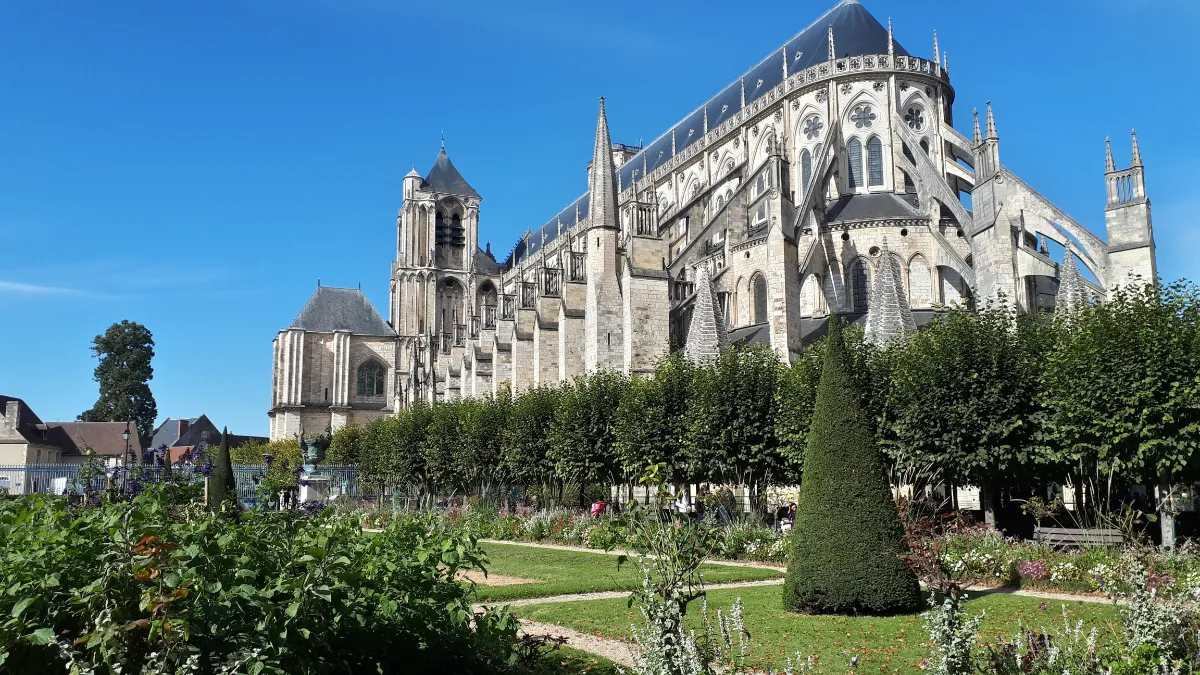
Population 65 000
Bourges has one of the richest old towns in this part of the Loire region. Saint Stephen’s Cathedral dominates the city with its scale, stained glass windows and powerful silhouette, visible from far away. Listed by UNESCO, it immediately gives the visit a clear focal point.
Around it, the streets are lined with many old timber framed houses, Renaissance façades and passageways where the city still feels medieval. The Jacques Cœur Palace stands out with its sculpted decoration and the look of a grand private residence.
Just a few minutes from the centre, the Bourges marshes change the atmosphere completely. Water, gardens and birds create a calm, almost hidden landscape, in sharp contrast with the monumental stone of the historic heart.
Orléans
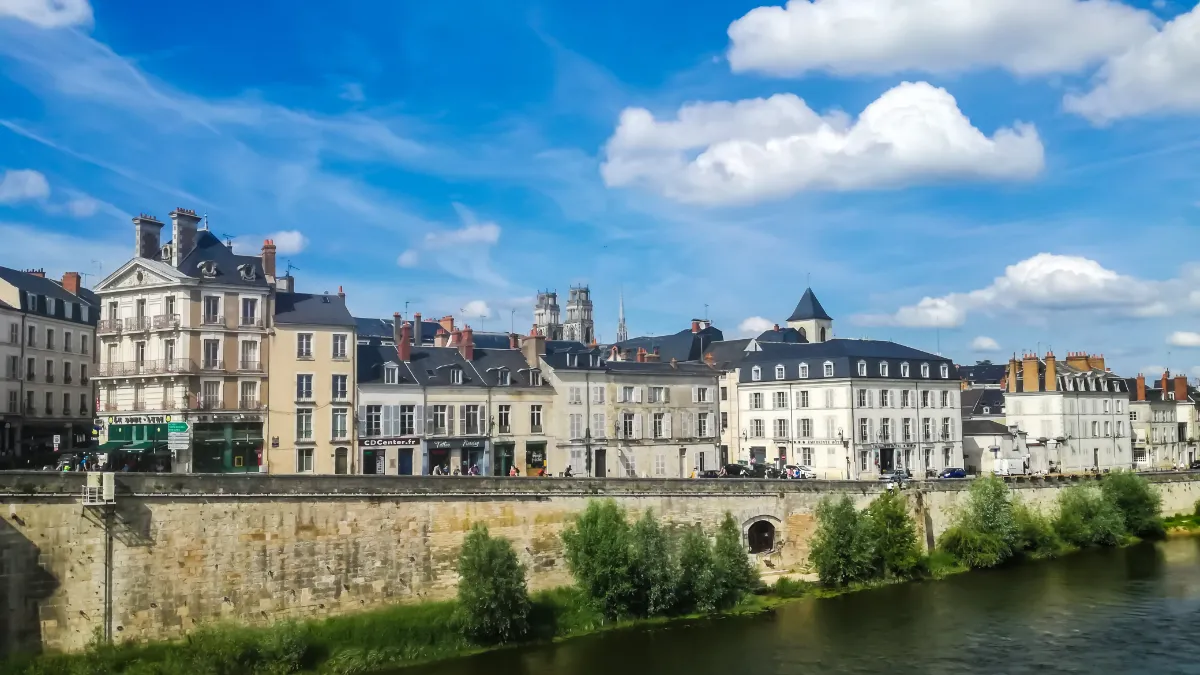
Population 115 000
Orléans is inseparable from Joan of Arc. It was here that her arrival in 1429 changed the course of the siege led by the English army. In the city centre, this memory is everywhere, without turning Orléans into a frozen historical backdrop.
Sainte Croix Cathedral impresses with its two 88 metre towers and its 114 metre central spire. Its richly detailed façade, soaring nave and stained glass windows dedicated to Joan of Arc make the visit easy to follow, even without knowing the history in detail.
On foot, you can easily go from the cathedral to the old streets, then down to the Loire. The river is a reminder of Orléans’s commercial importance, long set on a major route for travel and trade.
Tours
In Our Expanded Picks ☑️
Population 140 000
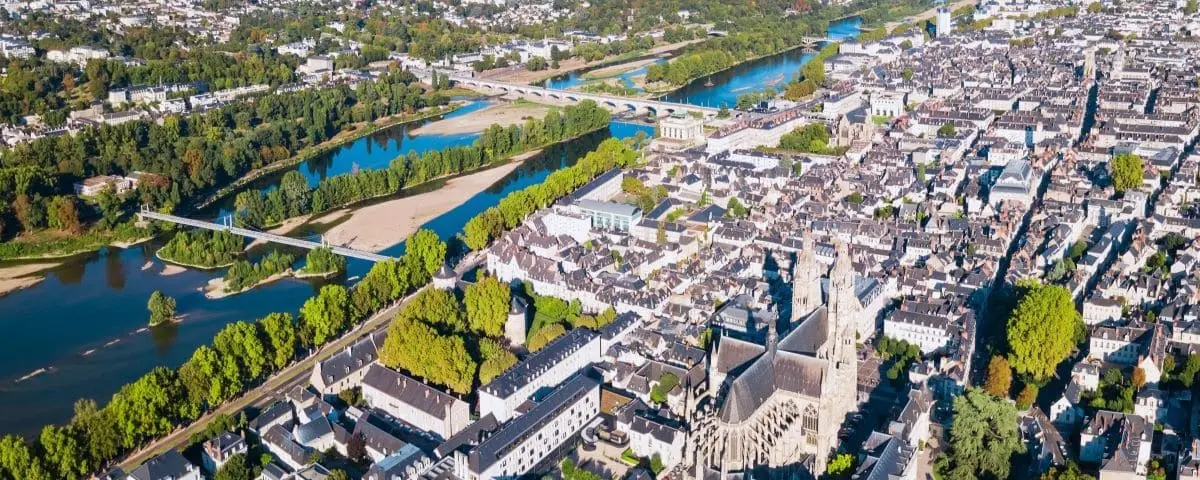
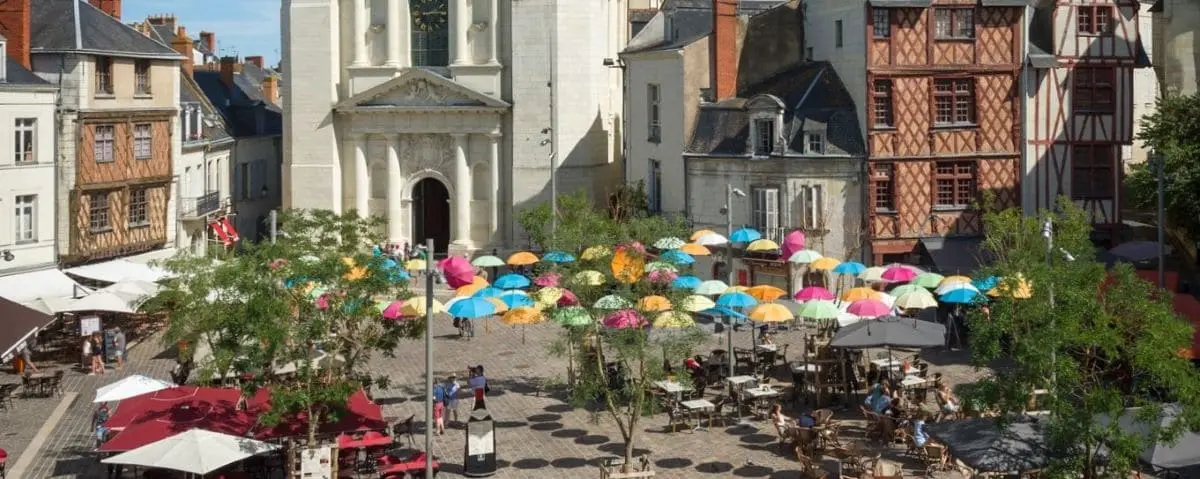
Tours stretches between two rivers, with the Loire to the north and the Cher to the south. Its centre is easy to explore on foot, with old streets, restored façades and squares lined with half timbered houses.
Saint Gatien Cathedral is well worth a proper stop. Built over several centuries, it mixes different styles, with a finely detailed façade, a large rose window and old stained glass. Inside, 13th and 15th century windows sit alongside contemporary creations.
In old Tours, Place Plumereau is the city’s most iconic spot, with its tall historic houses and lively atmosphere. The Compagnonnage Museum adds something more unusual: you discover craftsmen’s masterpieces beneath a wooden roof shaped like an upside down ship’s hull.
Angers
Population 160 000
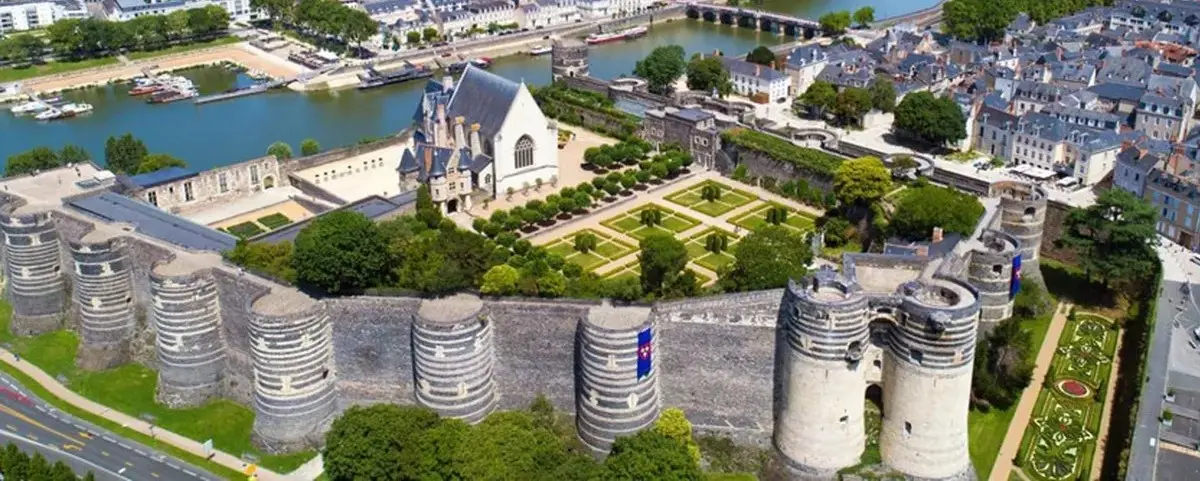
Angers first reveals itself through its castle, massive and dark, standing above the Maine river. Its round towers, alternating light and dark stone, give it the feel of an almost untouched fortress, far from the elegant image of leisure châteaux.
Inside, the major work not to miss is the Apocalypse Tapestry. Made in the 14th century, it tells a monumental story in images, now made up of 67 scenes displayed in a specially designed gallery. Its size, colours and narrative power are impressive, even without knowing the religious text.
The old centre completes the visit with Saint Maurice Cathedral, narrow streets, historic houses and views over the river. Angers has a rare balance between historic city, great fortress and easy walking.
TOWNS
Overview Table
| Name | Top Picks | Exp. Picks |
|---|---|---|
| Beaugency | ||
| Blois | ☑️ | |
| Vendôme | ||
| Amboise | ☑️ | |
| Chinon | ||
| Saumur |
Beaugency
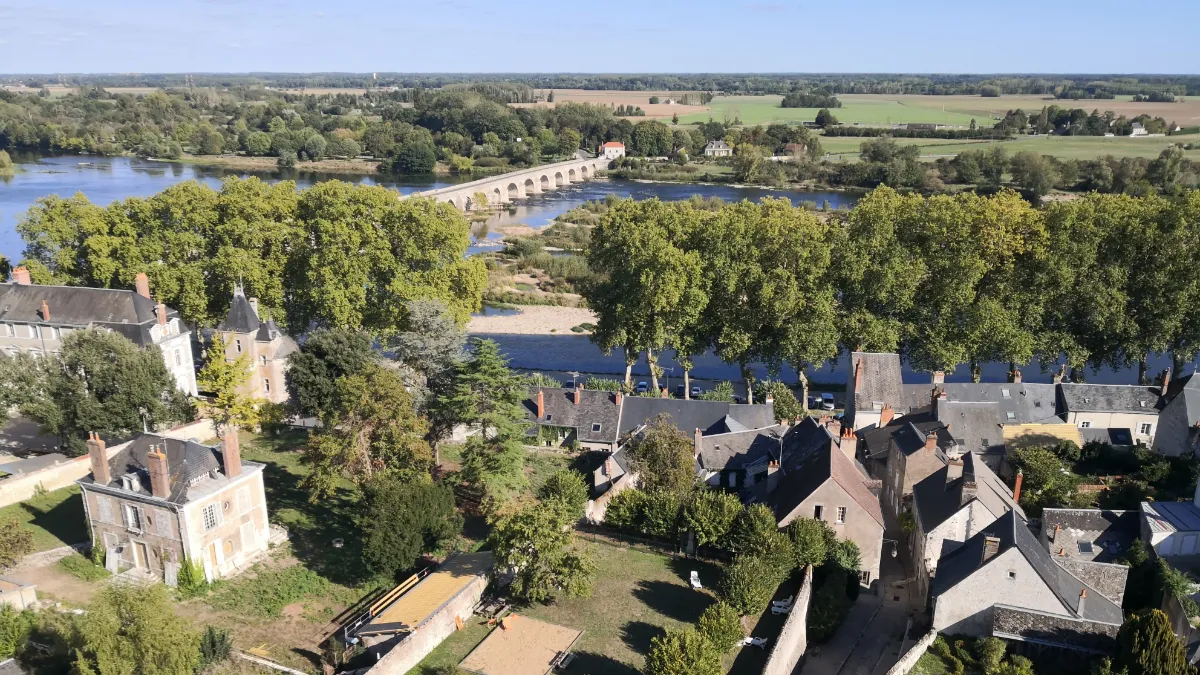
Beaugency stands on the banks of the Loire, with an old silhouette shaped by its stone bridge. Built in the 12th century and later restored after a major flood, it now has 23 arches and offers one of the best views of the town.
In the centre, you find a very rich history: once a stronghold, Beaugency was also one of the last places held by the English army on the Loire before Joan of Arc’s troops arrived.
The town hall is worth a stop for its Renaissance façade, decorated with sculptures, coats of arms and the salamander of Francis I. The tree lined quays extend the visit peacefully, facing the river.
Blois
In Our Expanded Picks ☑️
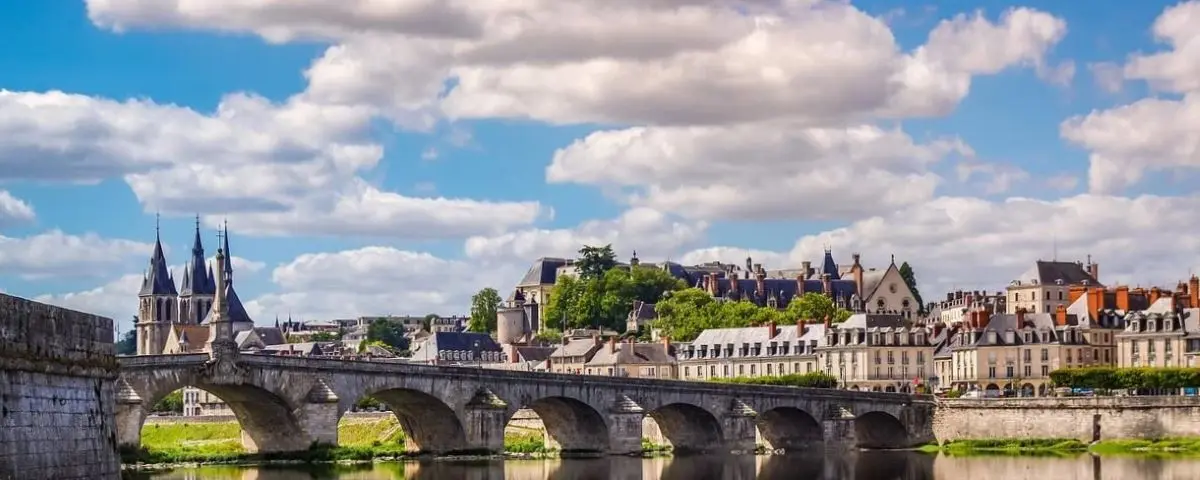
Blois feels like a tiered city rising above the Loire river. From the bridge and the quays, your eye climbs up to the rooftops, stairways, tight little streets and old façades. The slope gives the whole visit its character.
The château is still the city’s main landmark. Its courtyard brings several periods together in one place: an old defensive base, a brick and stone wing, then a more refined façade, famous for its sculpted outdoor staircase. At a glance, you see how power, taste and architecture changed over time.
Around it, Blois keeps a dense historic centre, with timber framed houses, narrow passages and streets leading back down to the river. The Loire then opens up the view and gives you distance from the upper town.
Vendôme
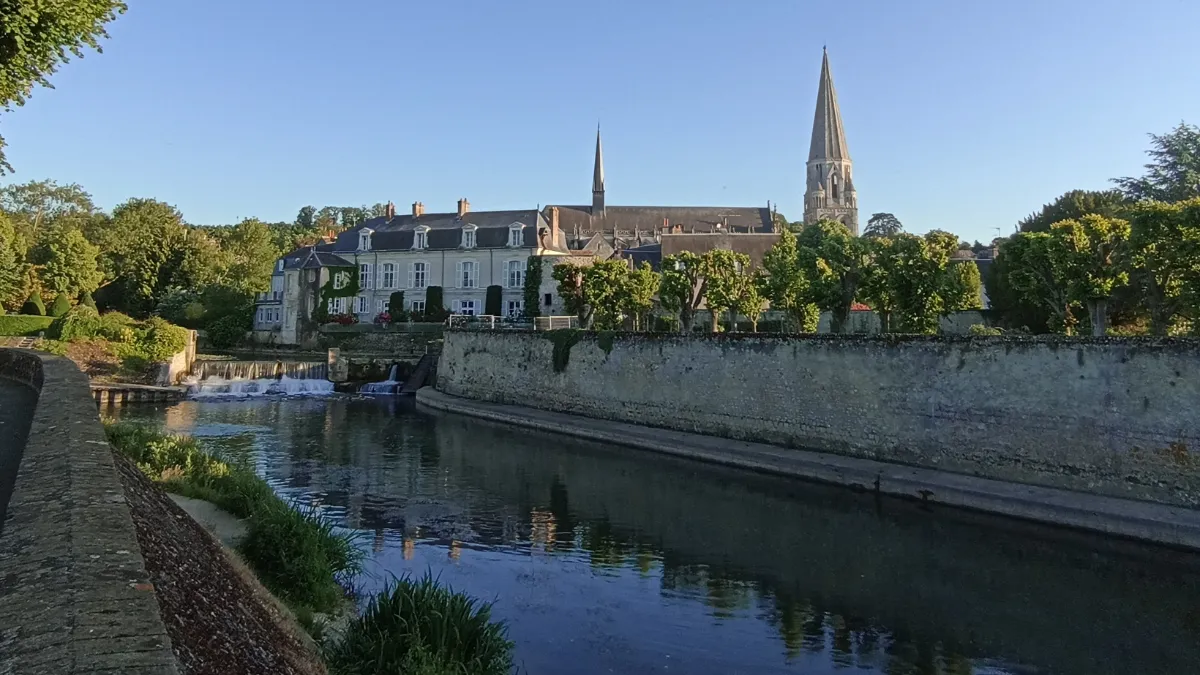
Vendôme unfolds along a river that wraps around the old town and runs between the houses in small waterways. This quiet presence gives the centre a calm charm, with old streets, stone passages and unexpected views of the water.
Above the town, the remains of the castle sit on a rocky spur, recalling the site’s former defensive role. Lower down, the Church of the Trinity dominates Vendôme with its 80 metre bell tower, visible from far away. The restored old centre is easy to explore on foot, between water, stone and gardens.
Amboise
In Our Expanded Picks ☑️
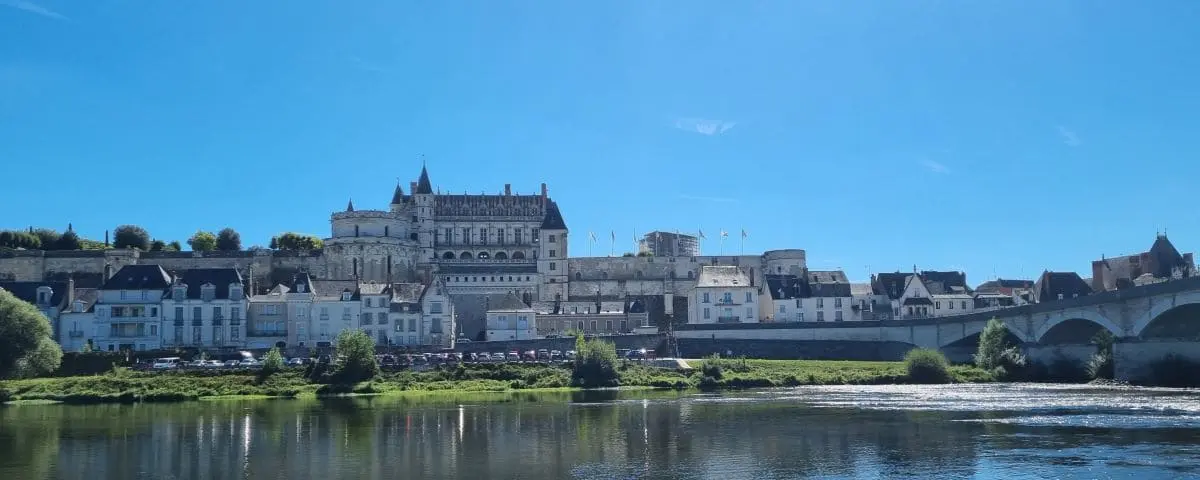
Amboise is best discovered first from the bridge, with the Loire in the foreground and the château rising above the houses. The town is compact and pleasant to explore on foot, between the quays, old streets and 15th and 16th century façades.
The château gives the whole landscape its strength. Once a fortress, later a royal residence, it combines powerful walls, broad terraces and elegant rooms. From the heights, the view over the Loire and the rooftops of Amboise helps you understand the importance of the place.
Just a few minutes away, the Château du Clos Lucé completes the visit: this is where Leonardo da Vinci spent the last three years of his life. Its furnished rooms, invention models and park make his world feel very real.
Chinon
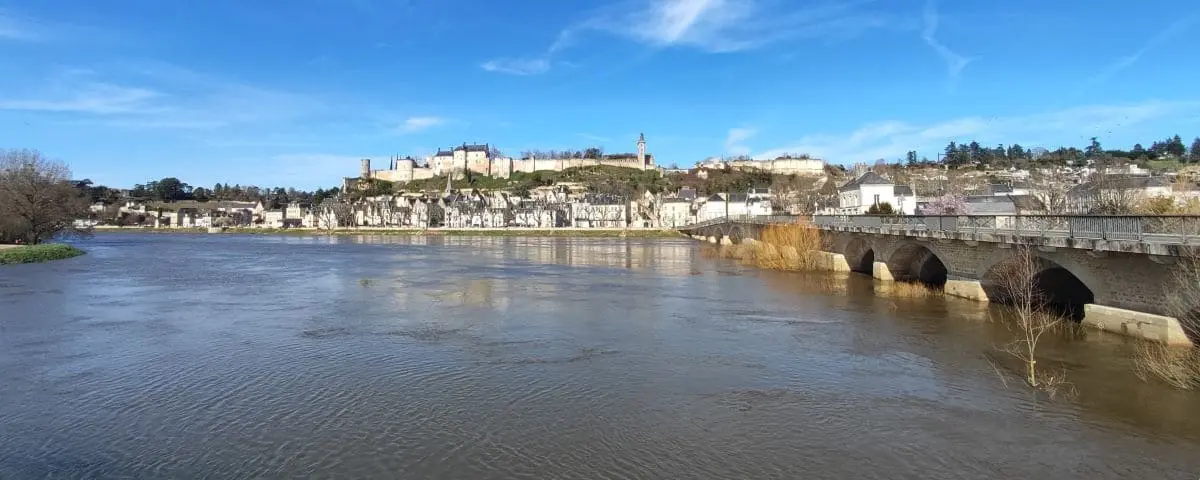
Chinon first reveals itself through its spectacular silhouette: below, the Vienne River, above it, an old town pressed against the slope, and at the very top, the fortress commanding the landscape. The pointed rooftops, pale houses and cliff create a powerful view, one of the most striking in the region.
As you walk along the water, you get the best distance on the whole scene. The line of trees, façades and old walls soften the view, while the fortress rises in a mass of stone above the town.
It is the fortress that gives Chinon all its strength. Restored and standing on its rock, it lines up towers, walls and battlements. It recalls the town’s major role in the age of kings and turns the visit into a real plunge into a medieval setting.
Saumur
Saumur is best seen first from the Loire: pale façades, wide quays, reflections on the water, then the château rising above the town like something from a fairy tale. From Offard Island, you get one of the finest views of the whole scene.
The château is the visual heart of Saumur. Its origins go back to the early 11th century, before it was enlarged, fortified, transformed and later restored. Its Gothic silhouette, set above the town, captures Saumur’s elegance in a single view: white stone, dark slate and the Loire in the foreground.
SMALL TOWNS (Village Feel)
Overview Table
| Name | Top Picks | Exp. Picks |
|---|---|---|
| Loches | ✅ | |
| Azay-le-Rideau | ||
| Langeais | ☑️ | |
| Montreuil-Bellay | ||
| Saint-Florent-le-Vieil |
Loches
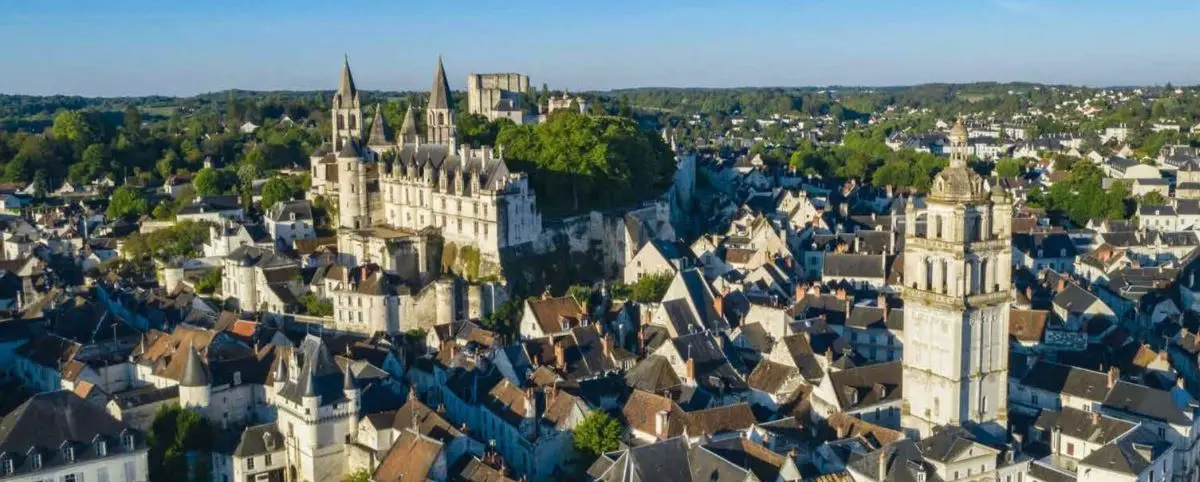
In Our Top Picks ✅
Loches is discovered from above, layered on a hill above a small river. The old town has a strong charm, with its medieval streets, 15th, 16th and 17th century houses and the atmosphere of an almost untouched royal town.
The keep has a presence of its own, standing 36 metres high. Its towers, dungeons and thick walls recall Loches’s defensive and later prison past, in a far more austere atmosphere than the Royal Lodge.
The Royal Lodge completes the visit, with its furnished rooms, terraces and views over the town and the river.
Azay-le-Rideau
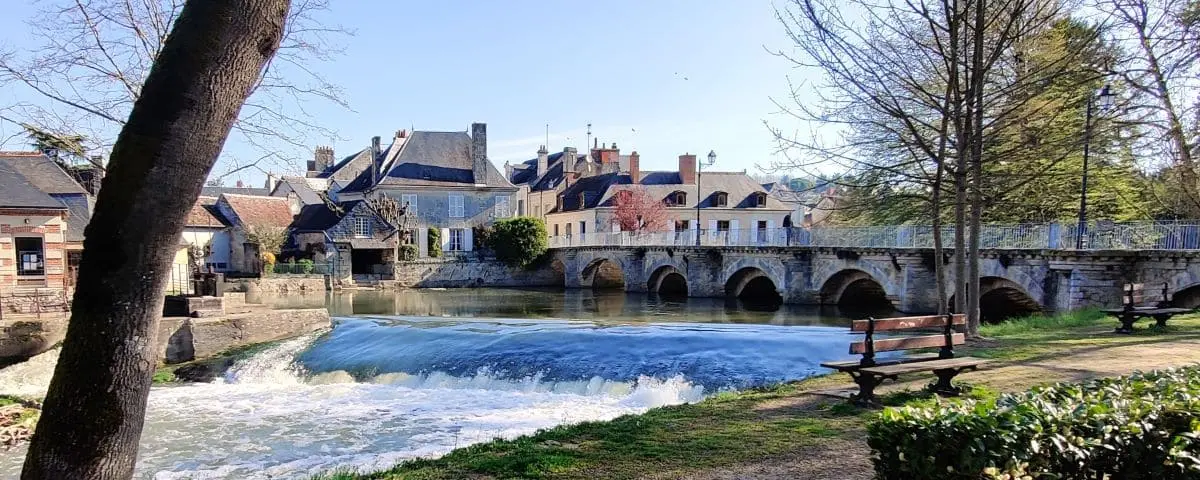
Azay le Rideau charms you with its rare balance between small town, river and château. You discover a peaceful place set in greenery, where the houses seem to protect the monument as much as the monument protects the town.
The château is the central image of Azay le Rideau. Set beside a small river, it stands out for its grace, harmonious proportions and elegant style. Its human scale makes it more intimate than the great royal palaces, while still giving it real presence.
Around it, the town keeps a gentle atmosphere, shaped by quiet streets, water, pale stone and gardens.
Langeais
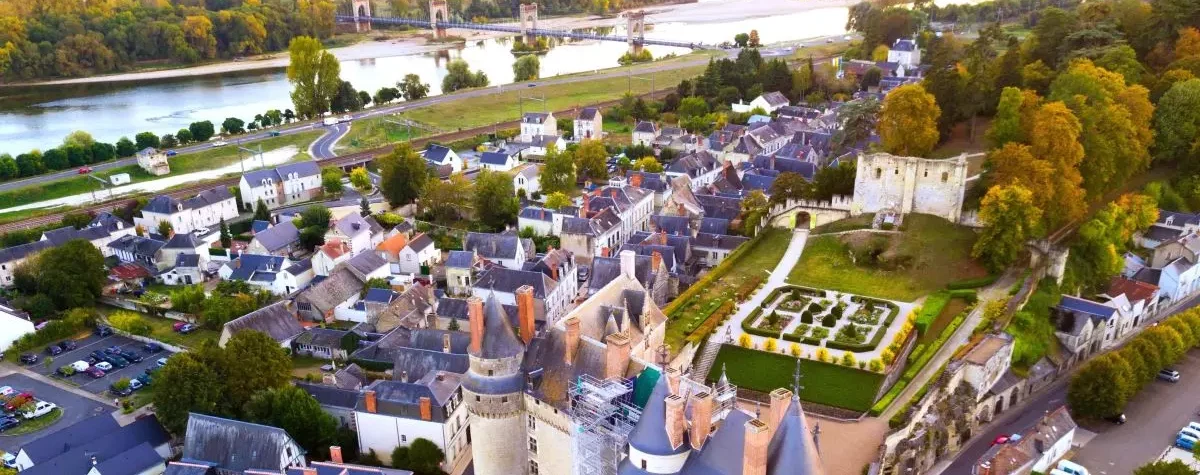
In Our Expanded Picks ☑️
Langeais feels like a lively small town on the banks of the Loire, with a striking suspension bridge and streets that keep a simple, pleasant, almost familiar atmosphere.
The château is inseparable from Langeais. Its proud, stern appearance strongly shapes the landscape, but the town does not seem intimidated by it. The whole place creates an interesting contrast between the quiet life of the streets, the nearby Loire and this stone silhouette.
Around the château, Langeais remains charming and friendly. The town feels as though it simply carries on with everyday life.
Montreuil-Bellay
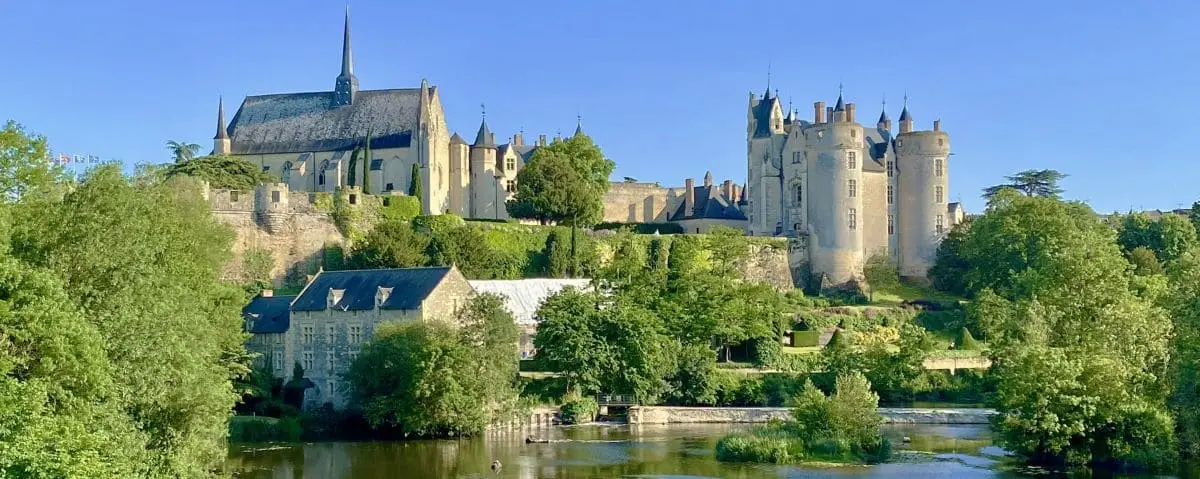
Montreuil-Bellay still has the feel of a small old town that has remained almost untouched. You find quiet streets, characterful houses, old town gates and still visible walls, which immediately give the place real historical depth.
The château dominates the whole scene without cutting the town off from its surroundings. From the bridge, you get a beautiful view of its façades, the river and the gardens. Still privately owned, it can also be visited through its interiors, unfurnished areas and gardens.
At the foot of the château, the banks of the small river offer a peaceful walk.
Saint-Florent-le-Vieil
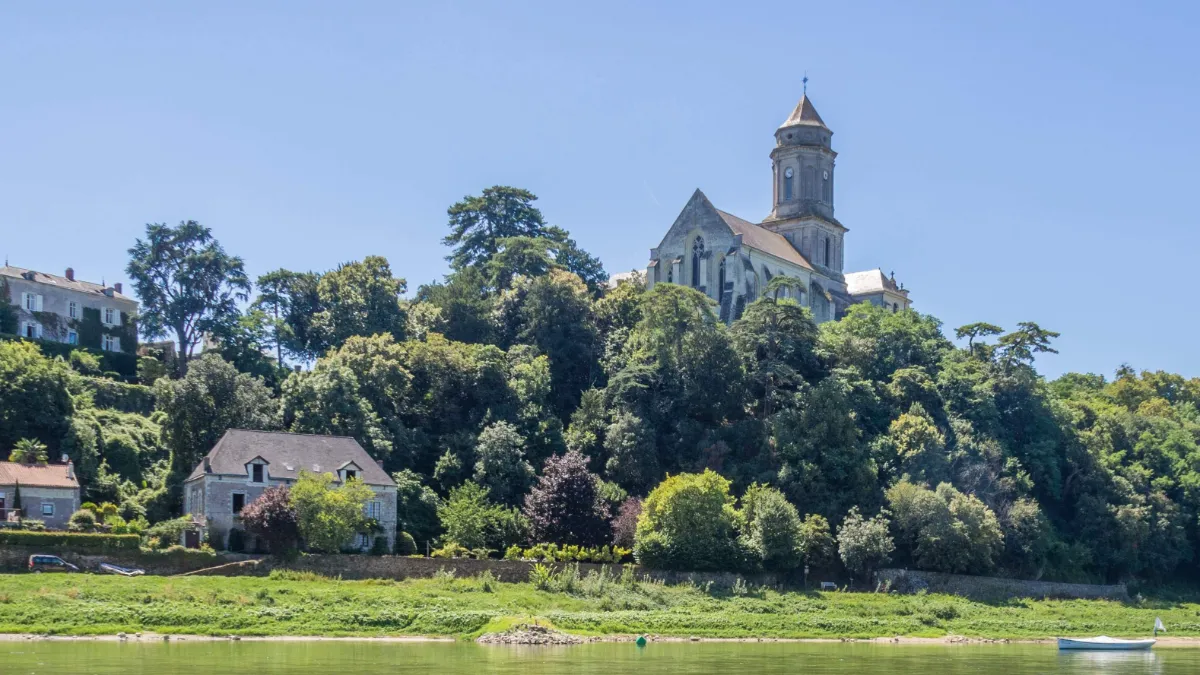
Saint Florent le Vieil is easy to spot from far away, set on the banks of the Loire, with its large church standing on a steep height. From the opposite bank or the nearby island, you clearly see the contrast between stone, the wooded slope and the river.
The place has a strong atmosphere, both calm and solemn. The Loire flows at the foot of the village, while the vegetation tumbles down towards the water in a disorderly way, giving the landscape an almost wild charm.