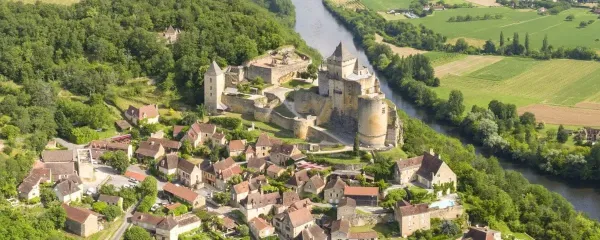



INTERACTIVE MAP
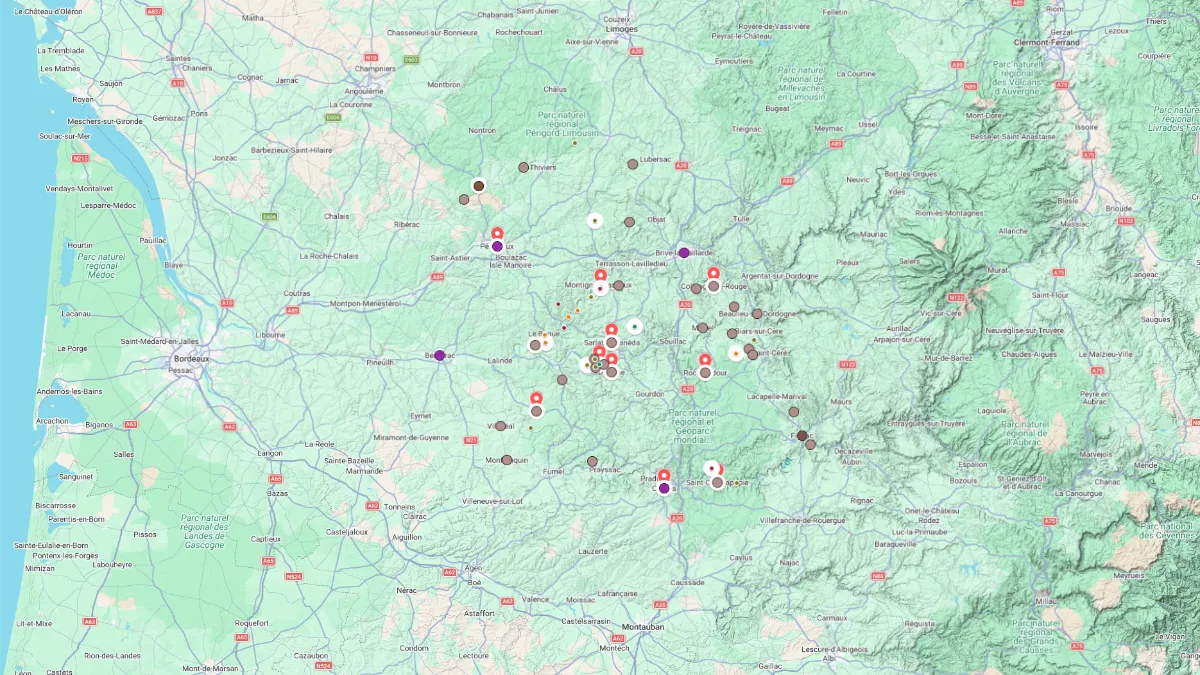
Click on the icon  in the top-right corner to view the map in full screen.
Show/Hide layers as needed.
After clicking on the image,
click on the icon  in the top-left corner to display the map legend.
Show/Hide layers as needed.
TOWNS
Overview Table
| Name | Top Picks | Exp. Picks |
|---|---|---|
| Périgueux | ✅ | ☑️ |
| Brive-la-Gaillarde | ||
| Bergerac | ||
| Cahors | ✅ | ☑️ |
Périgueux
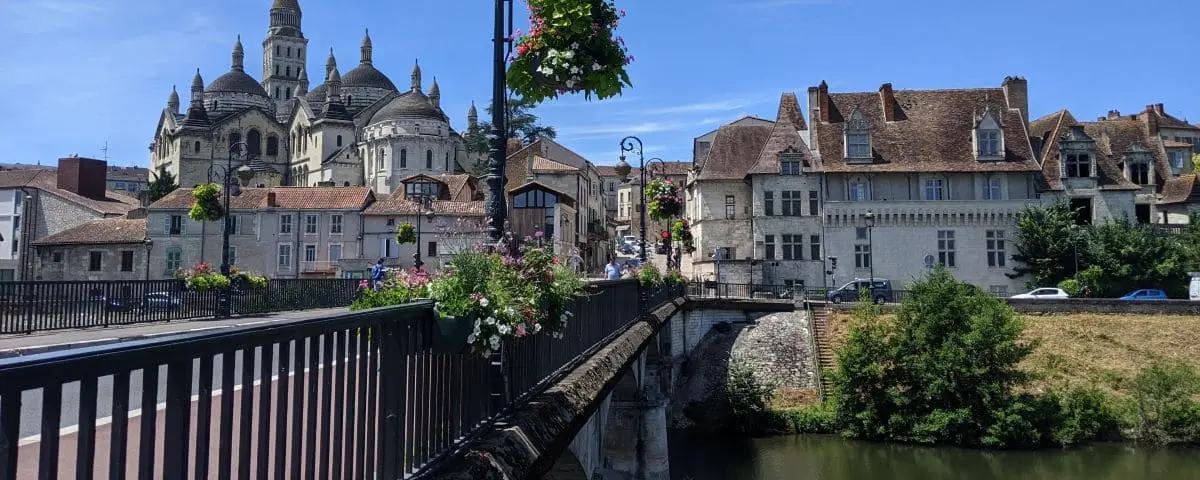
In Our Top Picks ✅
Périgueux feels like a city built in layers, where each period of its history is still easy to see without going far. The center is easy to explore on foot, between ancient stone buildings, narrow streets, impressive religious landmarks, and traces of the Roman city.
In the Vésone district, Périgueux reveals its Roman roots. This is where Vesunna once stood, the ancient city whose remains are now showcased in the Vesunna Gallo-Roman Museum.
The atmosphere changes in the medieval center. Around the Saint Front district, the streets become narrow, winding, and often pedestrian only. You walk past stone facades, hidden passageways, and small openings onto the city, with the Mataguerre Tower serving as both a landmark and a viewpoint.
The Périgueux Cathedral dominates the city with its large white domes. Its appearance is striking, very different from the tall, vertical churches people often picture when they think of France. Begun in the 11th century, expanded in the 12th, and restored in the 19th, it remains the city’s most iconic landmark.
Brive-la-Gaillarde
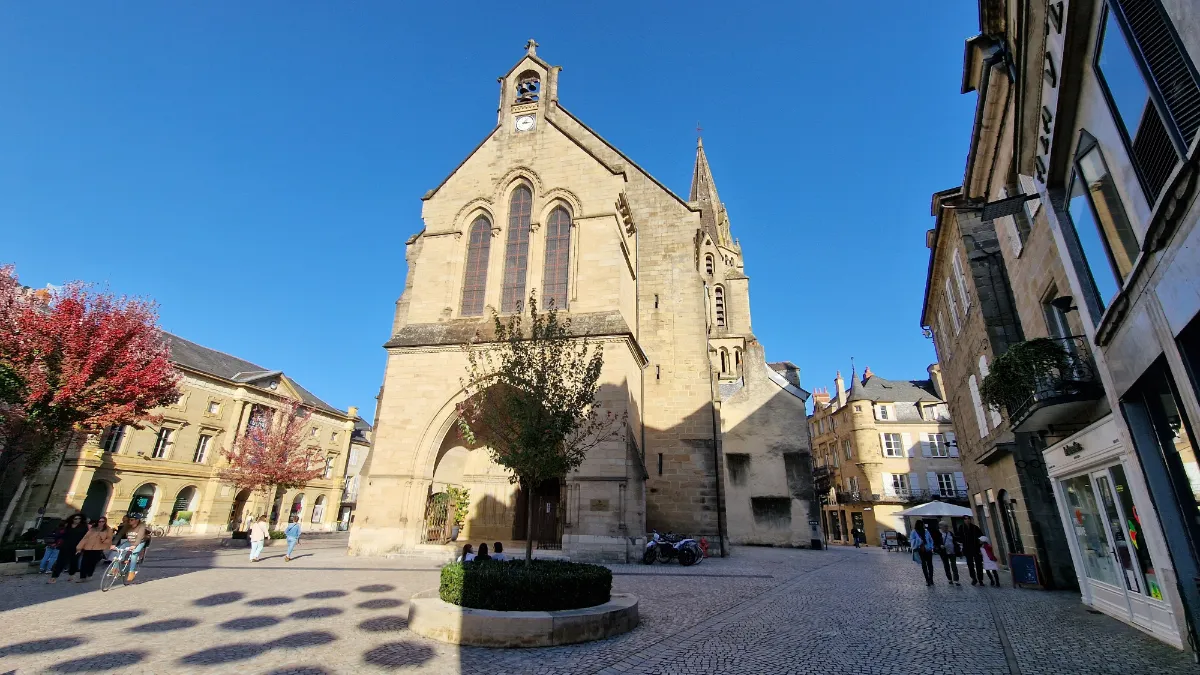
Brive-la-Gaillarde is a lively town in southwestern France, set between the Dordogne Valley and the first foothills of the Massif Central. You’ll find a pleasant historic center, with shopping streets, stone houses, and the atmosphere of a small but active town.
The heart of any visit is centered around Saint-Martin Collegiate Church, the large historic church at the center of Brive. Its origins go back to the earliest centuries of Christianity, and the current building still preserves elements from the 12th century, including a dome and finely carved capitals.
Bergerac
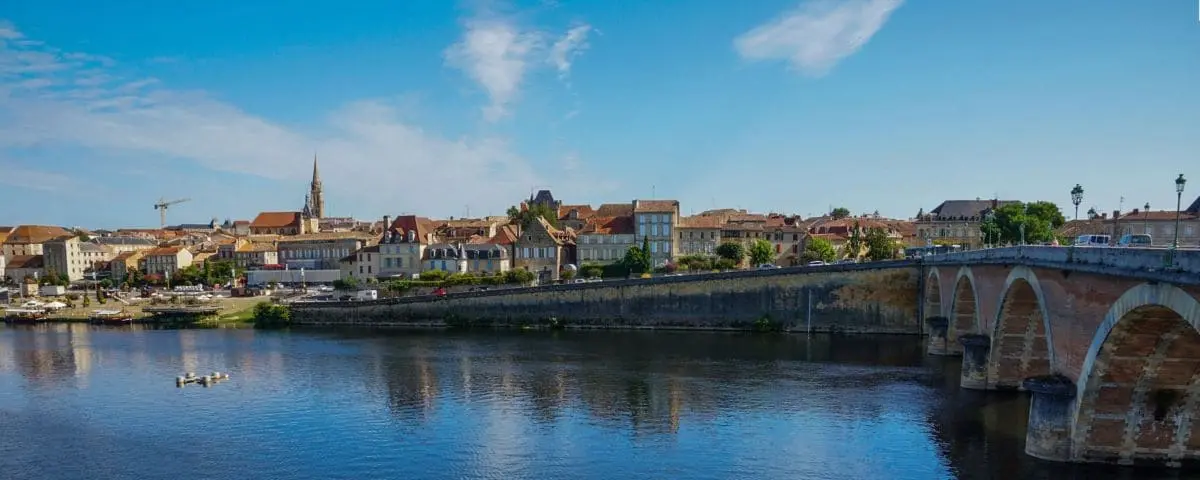
Bergerac’s historic center is best explored on foot, in a relaxed atmosphere filled with timber framed houses, small squares, and streets that still reflect the town’s long mercantile past.
For centuries, the town prospered through the wine and tobacco trade. During the Hundred Years’ War, it changed hands several times before becoming an important center of Protestantism in the 16th century. The name of Cyrano de Bergerac adds a literary touch to any stroll through the town.
Cahors
In Our Top Picks ✅
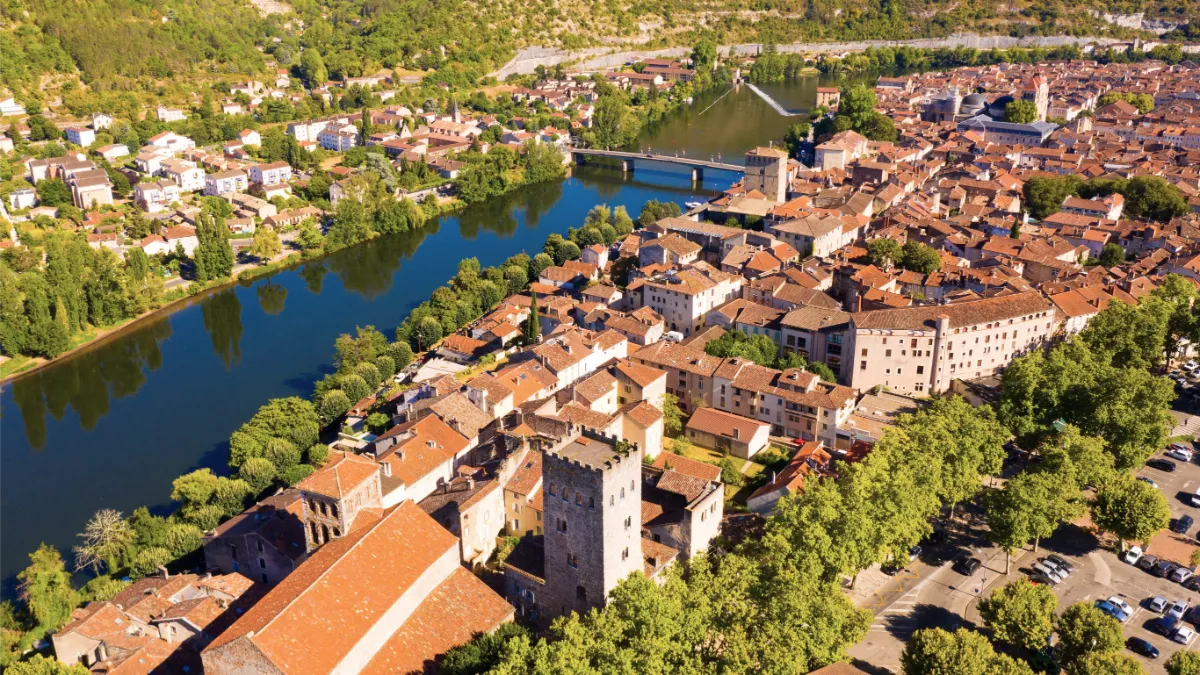
Cahors developed within a wide bend of the Lot River, giving it almost the appearance of a peninsula. Here, you discover an old town shaped by the Middle Ages, with narrow streets, small squares, and stone houses.
As you walk toward the riverbanks, you reach the Pont Valentré, a large fortified bridge dating from the 14th century, with its tall towers and reflection in the water. Set slightly away from the town center, it remains Cahors’ most iconic landmark.
Saint-Étienne Cathedral is another reminder of the city’s religious importance during the Middle Ages.
SMALL TOWNS (Village Feel)
Overview Table
| Name | Top Picks | Exp. Picks |
|---|---|---|
| Brantôme-en-Périgord | ☑️ | |
| Sarlat-la-Canéda | ✅ | ☑️ |
| Figeac |
Brantôme-en-Périgord
In Our Expanded Picks ☑️
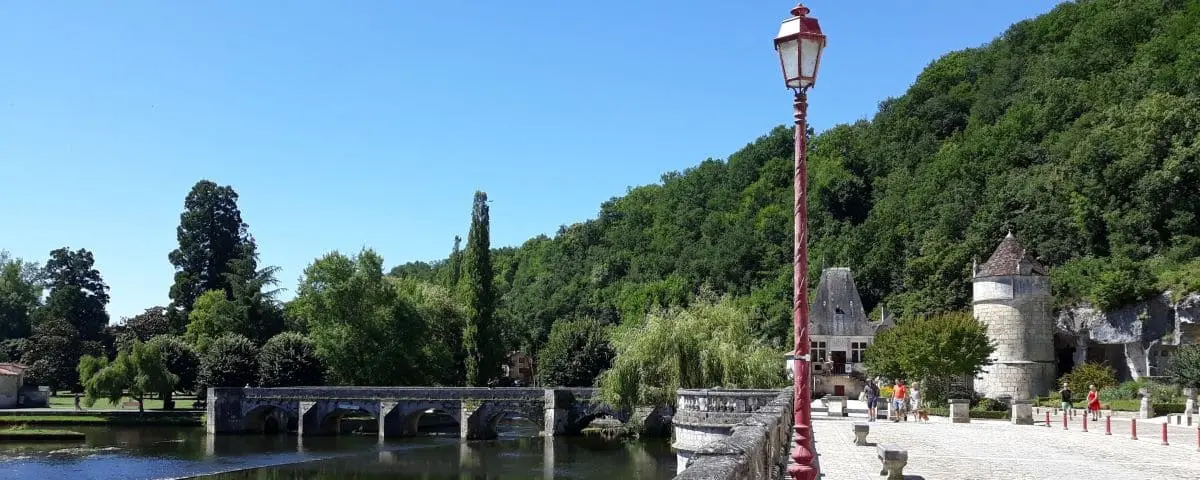
Brantôme first charms visitors with its setting. The river wraps around the town, the water reflects the pale facades, and the whole place feels almost like an island.
The Brantôme Abbey dominates the visit. Its church, historic buildings, and spaces carved directly into the cliffside reflect the site’s long religious history. You can also enjoy views of the town from its bridges and follow the peaceful riverside paths.
Sarlat-la-Canéda

In Our Top Picks ✅
Sarlat offers one of the most impressive historic townscapes in France. You walk through a small town of golden stone, with cobbled lanes, narrow passages, hidden courtyards, alleyways, and facades that give a strong impression of an intact historic setting.
After the Hundred Years’ War, wealthy families built many fine houses. This mix of medieval and Renaissance architecture gives the center its dense character: carved windows, dark roofs, staircases, towers, and grand facades.
Saint-Sacerdos Cathedral, begun in the 14th century, shows several styles because its construction lasted for a very long time. Its bell tower porch comes from an older church.
In the 1960s, Sarlat became a French model for urban restoration: facades were cleaned, roofs redone, wires hidden, and cobblestones put back in place. More than 250 buildings, monuments, and sites were saved.
Figeac
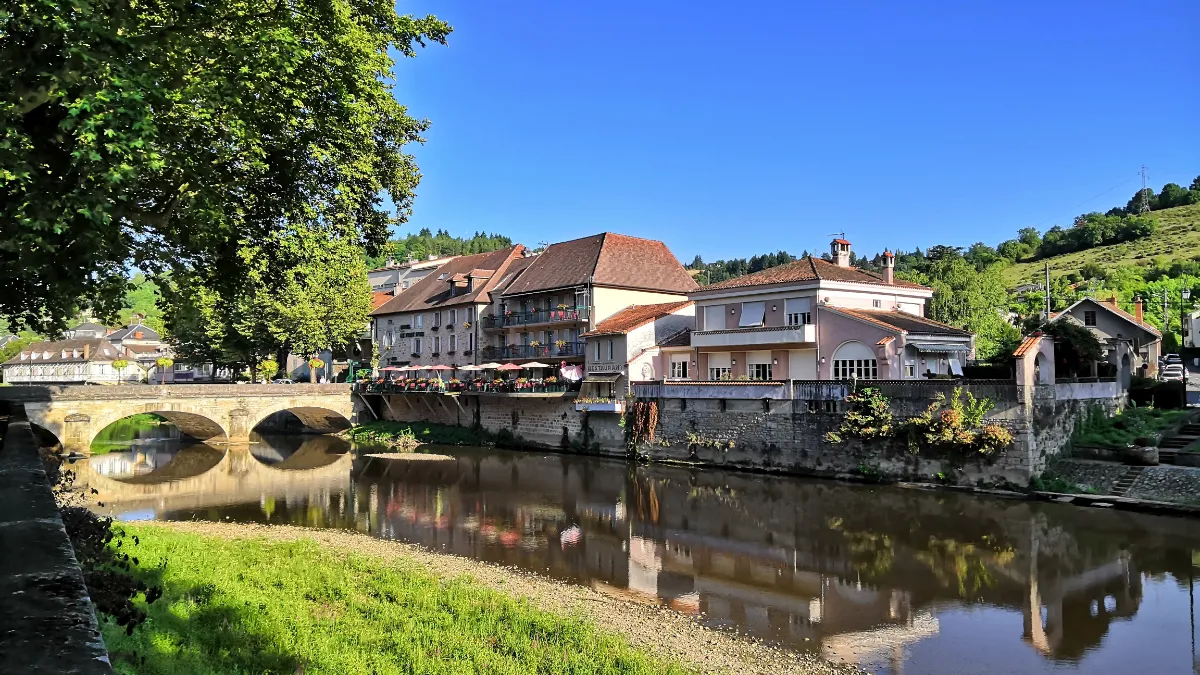
Figeac stretches across two hillsides along a small river. You’ll discover an old town that feels compact and vertical, where streets climb, twist, and quickly shift between light and shadow. Tall houses, narrow passageways, and pale stone buildings give the center a striking sense of depth and character.
Part of the pleasure comes from the details visible everywhere: small corner turrets, finely decorated windows, carved symbols, historic doorways, and discreet balconies. The town retains an elegant and richly layered atmosphere. Its houses tell the story of a once prosperous place where merchants and travelers regularly passed through.
At the heart of the town, the main square recalls the city’s most famous son, the French scholar who deciphered Egyptian hieroglyphs. The museum, partly housed in his birthplace, tells the story of writing systems around the world, from the earliest carved symbols to today’s digital scripts.