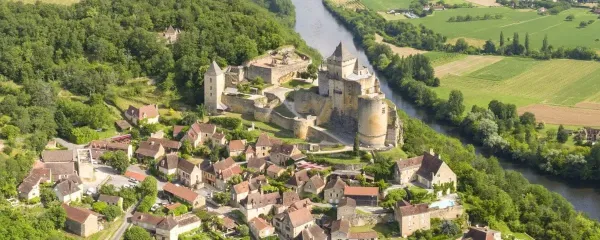



INTERACTIVE MAP
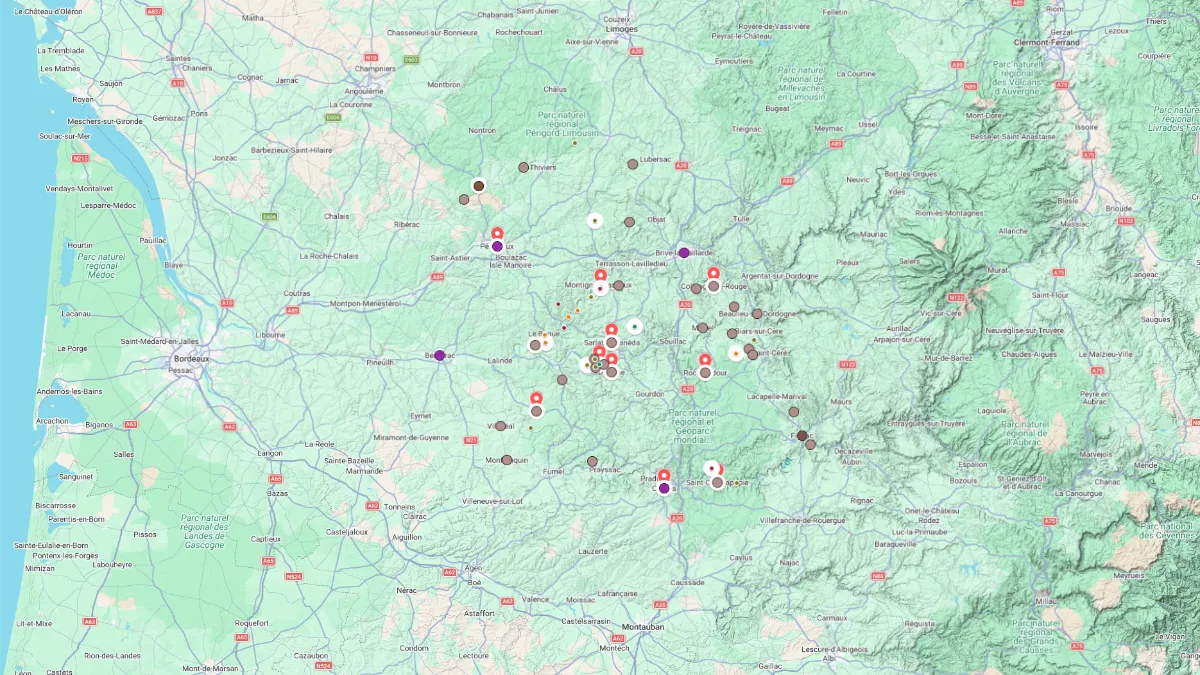
Click on the icon  in the top-right corner to view the map in full screen.
Show/Hide layers as needed.
After clicking on the image,
click on the icon  in the top-left corner to display the map legend.
Show/Hide layers as needed.
NORTH
Overview Table
| Name | Top Picks | Exp. Picks |
|---|---|---|
| Bourdeilles | ||
| Saint-Jean-de-Côle | ||
| Ségur-le-Château | ||
| Saint-Robert |
Bourdeilles
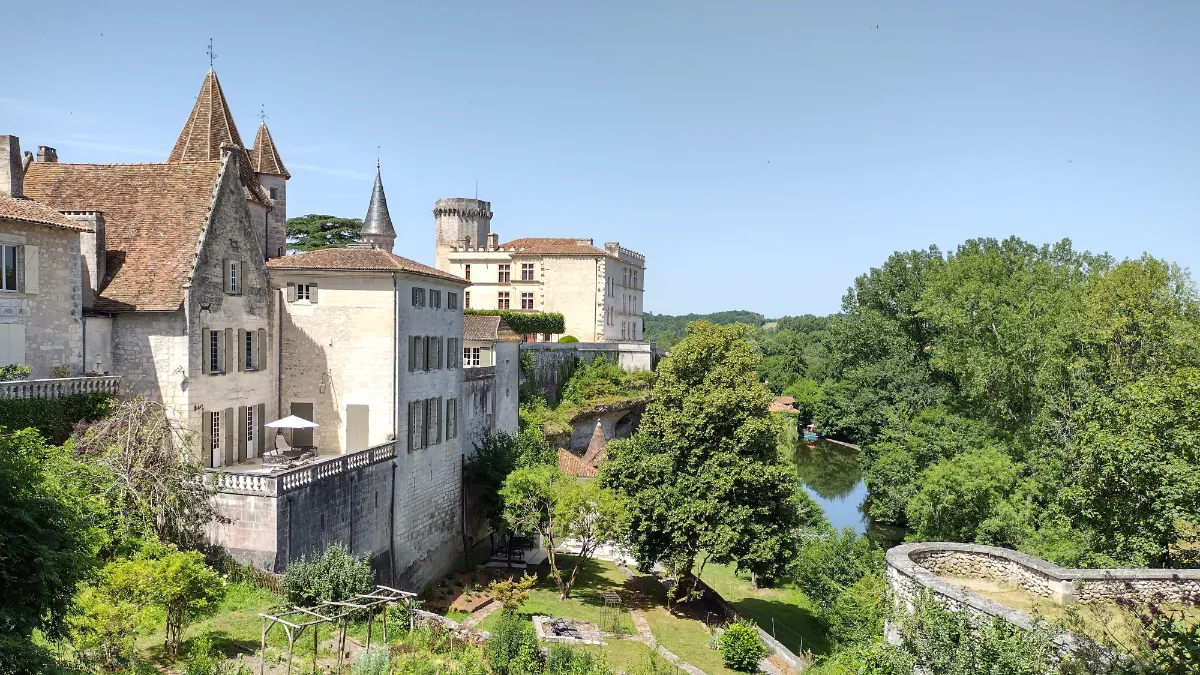
Bourdeilles can be discovered in a peaceful setting on the banks of the Dronne River. The château overlooks the village from its rocky outcrop, offering a beautiful view of the Gothic bridge that crosses the water. The bridge dates back to the Middle Ages, and its stone cutwaters helped it withstand the river’s current.
The main attraction is a rare combination: a medieval fortress and, right beside it, an elegant Renaissance residence. From the gardens, the view opens onto the river and the pale cliffs beyond.
Saint-Jean-de-Côle
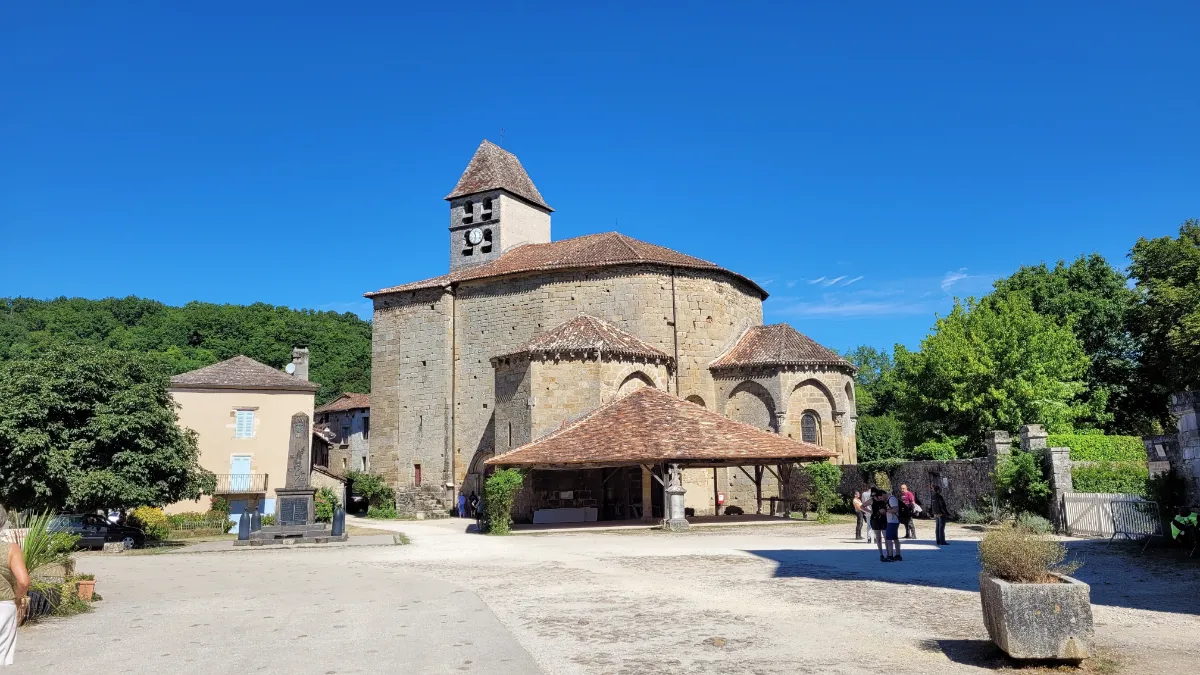
Saint-Jean-de-Côle brings together almost everything that makes a historic village so appealing: tightly packed houses, ochre colored facades, old brown roof tiles, a large square, a market hall, a château, and a church. The whole village feels remarkably harmonious.
At the end of the main street, you’ll see a small humpback medieval bridge. Saint-Jean-Baptiste Church, built in the 12th century, stands out for its unusual layout and the carved details on its exterior: animals, birds, masks, and decorative motifs.
Ségur-le-Château
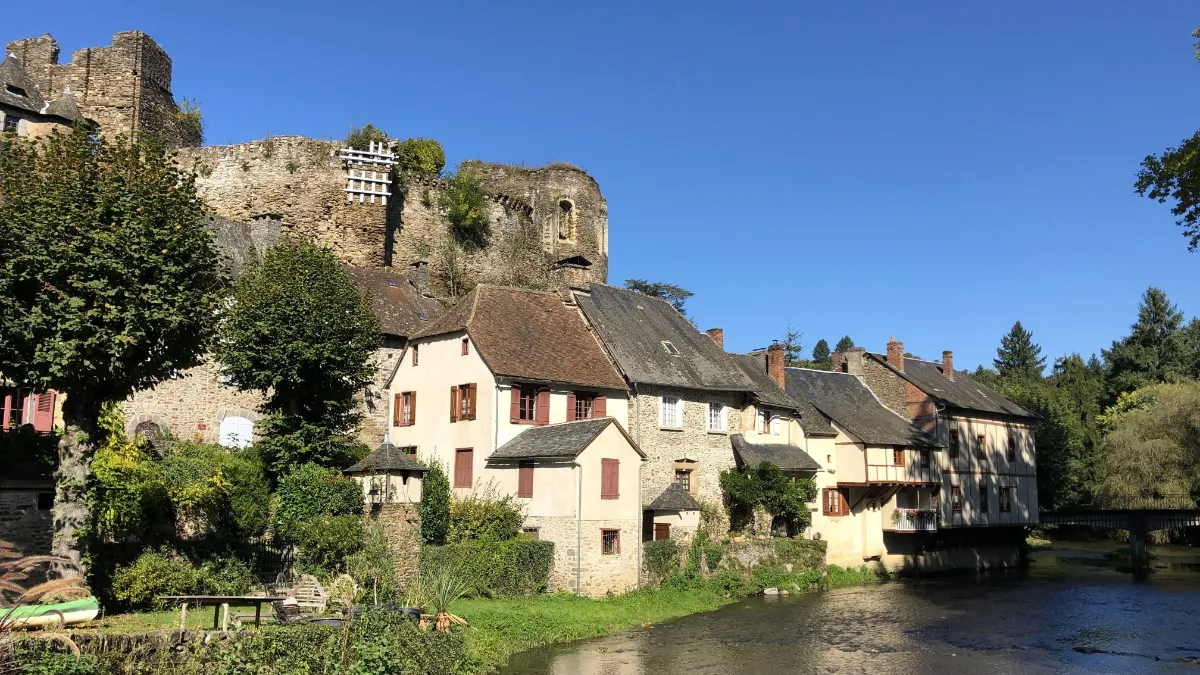
Ségur-le-Château nestles on the banks of the Auvézère River, beneath the imposing ruins of its former castle. You walk through cobbled streets lined with noble houses, turrets, timber framed buildings, spiral staircases, and large chimneys.
The village has also preserved the memory of a former royal court of justice, active from the 15th to the 18th century. This role attracted magistrates, legal scholars, and notable figures, which explains the wealth and elegance of the houses still visible today.
Saint-Robert
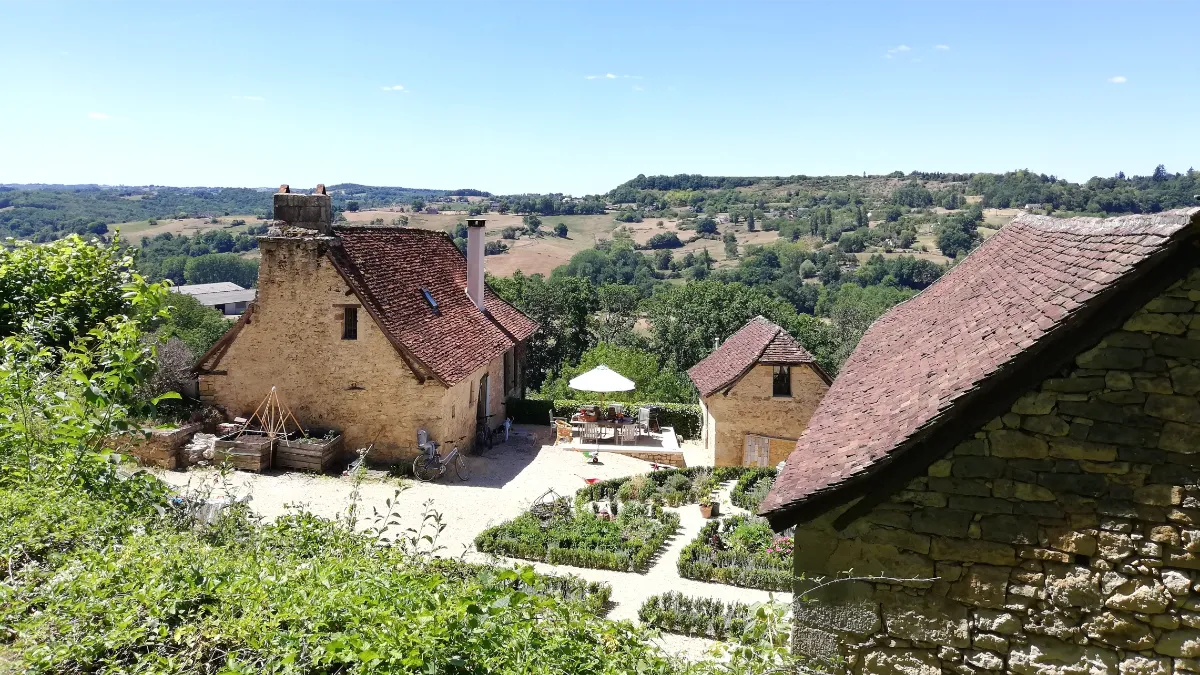
Saint-Robert is a hilltop village known for its old streets, small squares, and beautiful stone houses. You’ll also find the remains of fortified gates and a fountain associated with healing beliefs.
Notre-Dame Church, built in the 12th century, is the village’s main landmark. It lost its large nave in the 16th century but still preserves its choir, transept, and a 13th century wooden Christ figure.
CENTER
Overview Table
| Name | Top Picks | Exp. Picks |
|---|---|---|
| Saint-Amand-de-Coly | ||
| Domme | ✅ | ☑️ |
| La Roque-Gageac | ||
| Castelnaud-la-Chapelle | ||
| Beynac-et-Cazenac | ||
| Limeuil | ☑️ | |
| Belvès | ||
| Monpazier | ✅ | ☑️ |
| Villeréal | ||
| Monflanquin | ||
| Martignac |
Saint-Amand-de-Coly
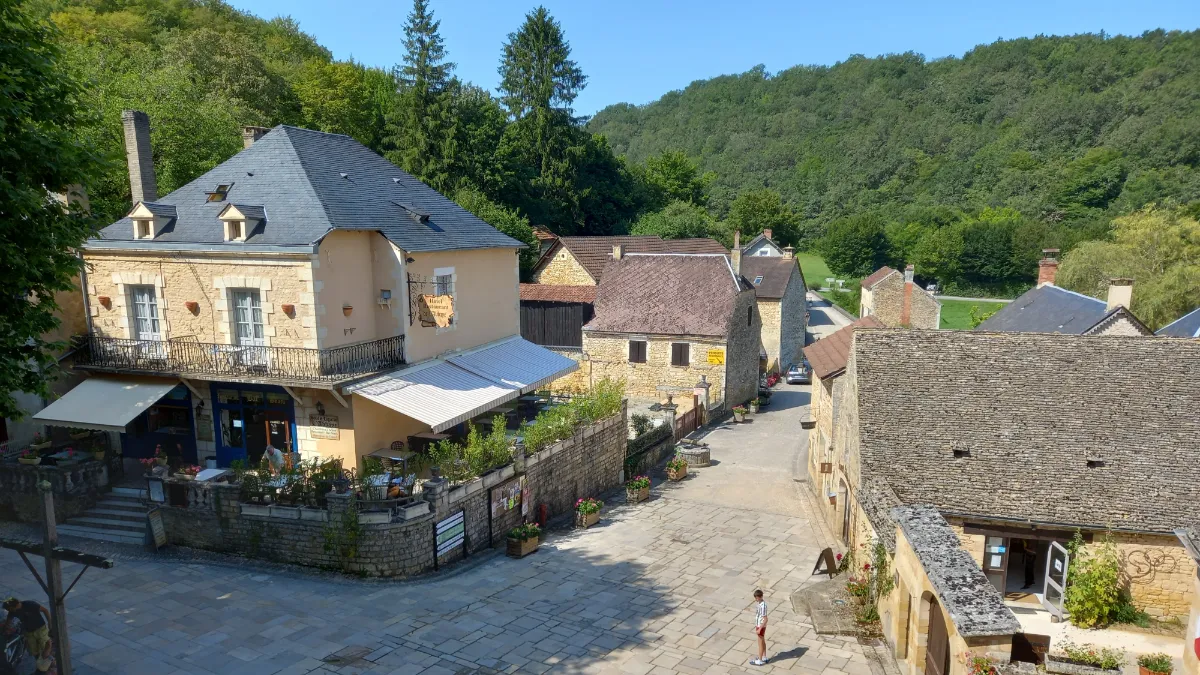
Saint-Amand-de-Coly is a tiny stone village built around a former abbey. You explore it on foot, passing a handful of simple houses and a massive church that was fortified during the Hundred Years’ War.
Its story begins with a young nobleman who became a monk and settled in a cave. The site later attracted a religious community, and the village gradually developed around its presence.
Domme

In Our Top Picks ✅
Domme stands high above the Dordogne River. You enter through old fortified gates, then make your way between stone houses, small squares, and sweeping views across the valley.
Beneath the village, a large cave has been opened to visitors, with a 400 metre gallery lined with stalactites, stalagmites, columns, and pools of water. At the exit, the Jubilee Terrace offers a direct view toward Beynac and La Roque-Gageac.
La Roque-Gageac
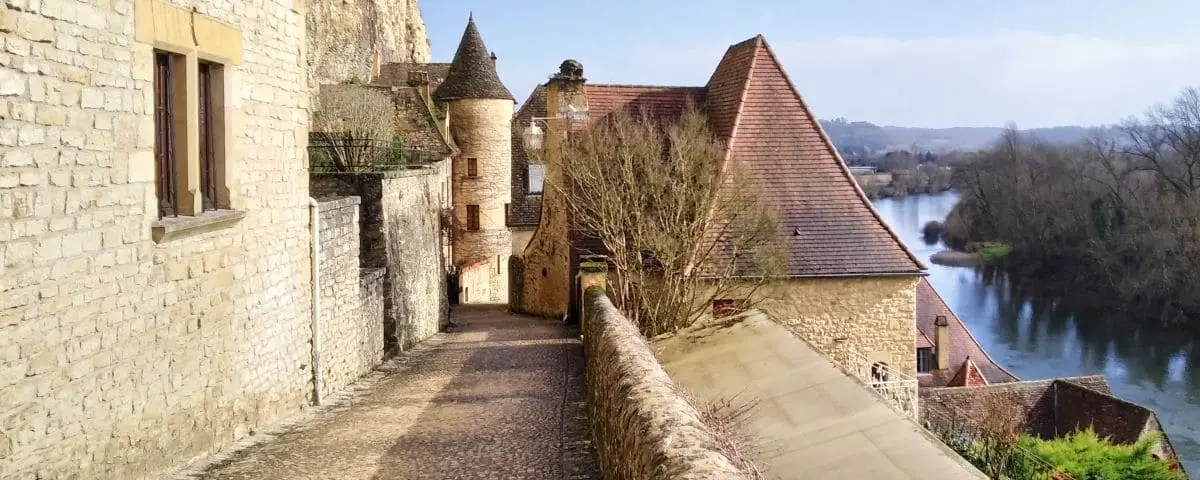
La Roque-Gageac is squeezed between the cliff and the Dordogne River. You walk past houses with brown tiled roofs, tightly packed together and sometimes built directly against the rock.
The old quays recall the time when the river supported fishermen and boatmen. Higher up, a 15th century church blends into the stone and vegetation, benefiting from a particularly mild climate thanks to its south facing position.
Castelnaud-la-Chapelle
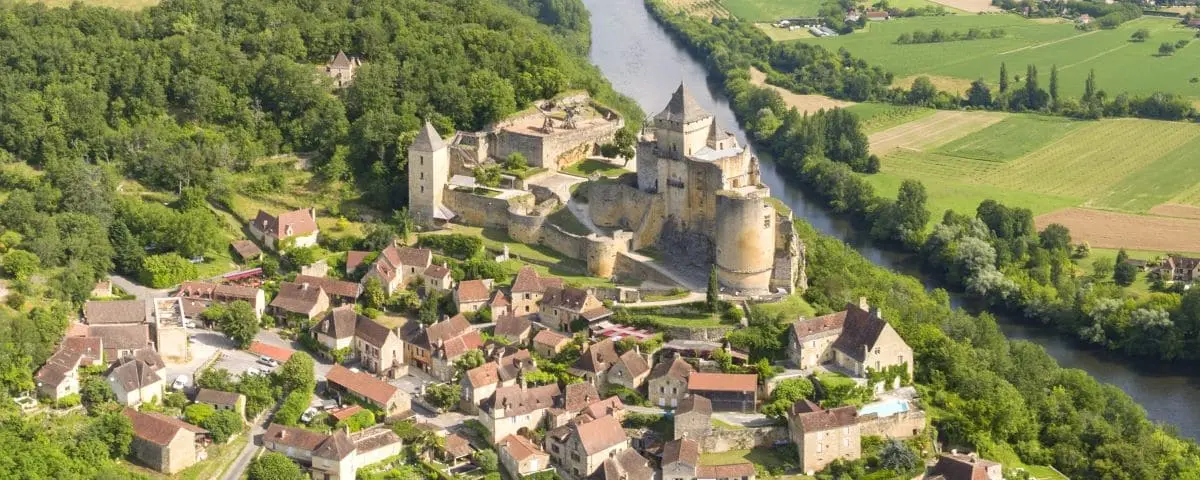
Castelnaud-la-Chapelle sits on a rocky spur overlooking the valley. The village is dominated by a fortress built to watch over Beynac Castle on the opposite side of the river.
The castle houses a museum dedicated to medieval warfare. You can see weapons, crossbows, armouries, scale models, and reconstructions of large siege engines.
Beynac-et-Cazenac
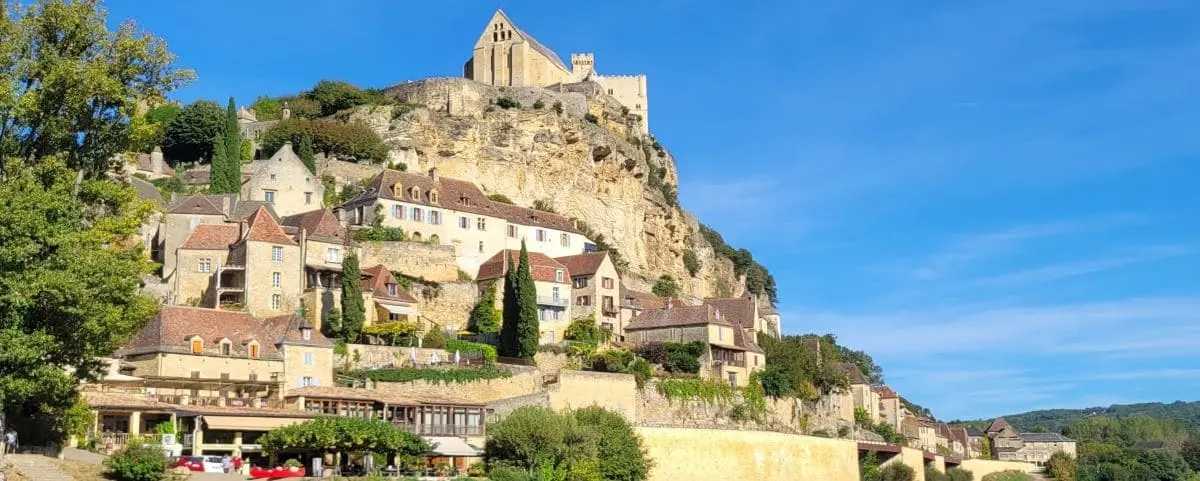
Beynac-et-Cazenac climbs the hillside between cliffs, historic houses, and a fortified castle. You make your way up steep streets lined with noble residences whose stone changes colour with the light.
From the top, the view opens onto the Dordogne River and the other villages scattered among cliffs and greenery. The castle dominates the landscape and recalls the conflicts between the French and the English during the Middle Ages.
Limeuil
In Our Expanded Picks ☑️
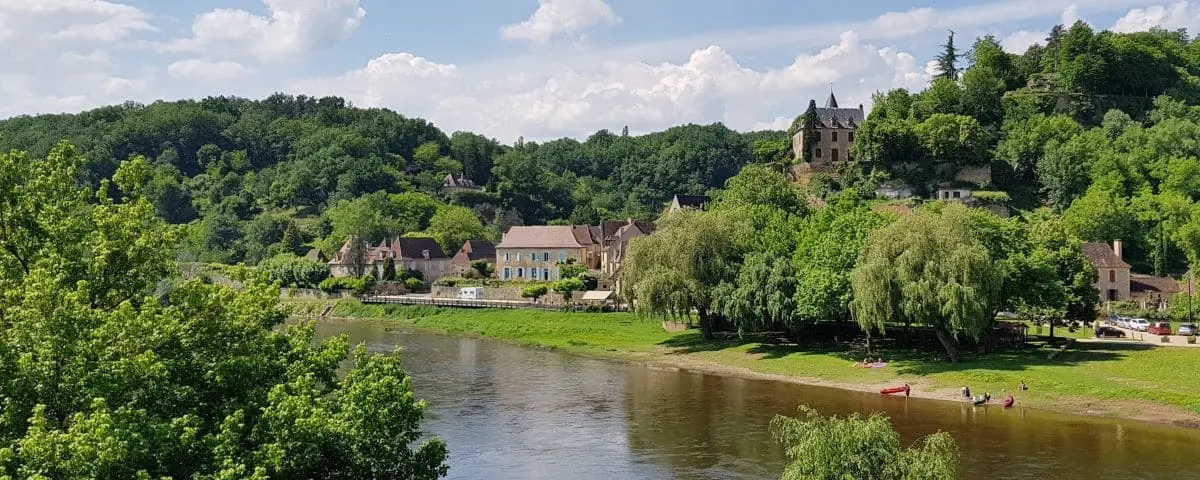
Limeuil sits where two rivers meet, the Dordogne and the Vézère. Down below, the old harbour recalls the days of river trade, while across the water a bridge forms a surprising angle above the two rivers.
You then make your way up into the old village, past stone houses, former ramparts, brown tiled roofs, and medieval gateways. At the top, beautiful gardens overlook the rivers and the surrounding plain.
Belvès
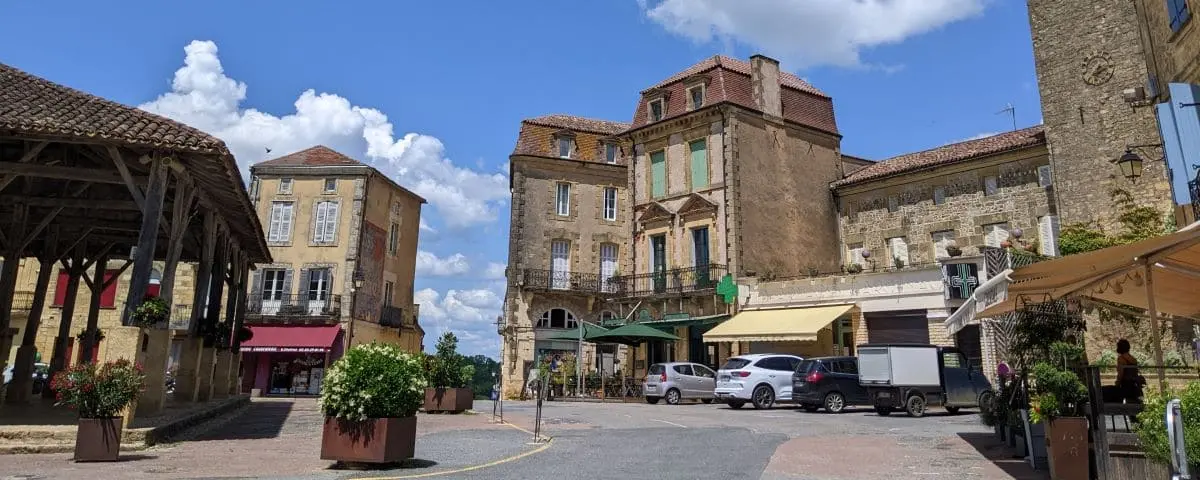
Belvès stands on a rocky hilltop, with ochre coloured houses, flat stone roofs, and traces of old fortifications. You’ll find a compact village built for protection, with narrow streets, historic houses, and wide open views.
The village also preserves underground dwellings, once used as shelters or living spaces. These subterranean rooms offer a different perspective on the village, one that is more hidden and more defensive.
Monpazier
In Our Top Picks ✅
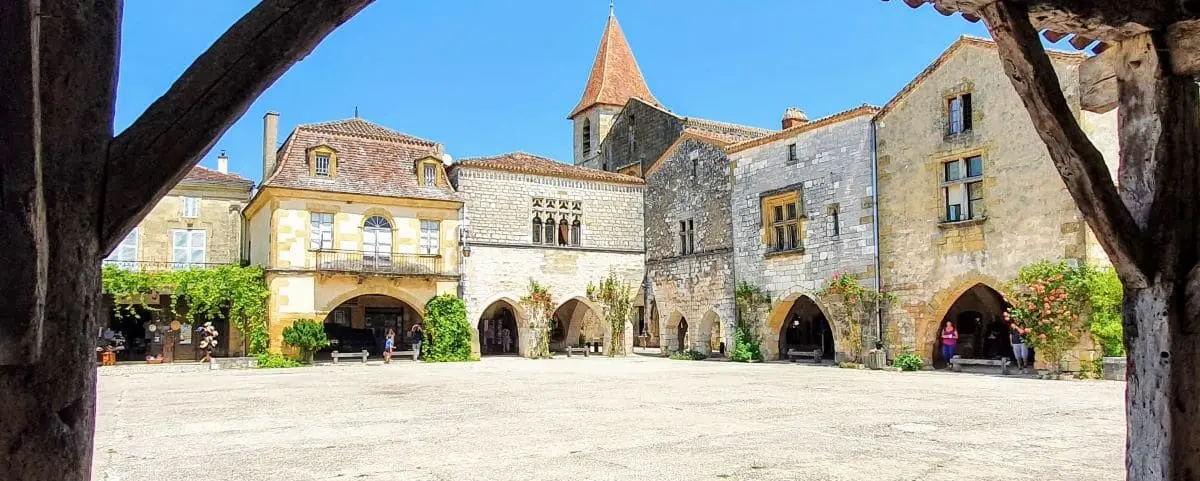
Monpazier is a fortified medieval village built according to a remarkably regular plan. You walk along straight, almost geometric streets that lead to a large central square surrounded by arcades.
The Place des Cornières gives the village much of its character: houses of equal width, covered walkways, and corners cut away to allow horsemen to pass through. The whole village has retained a rare sense of harmony since the 13th century.
Villeréal
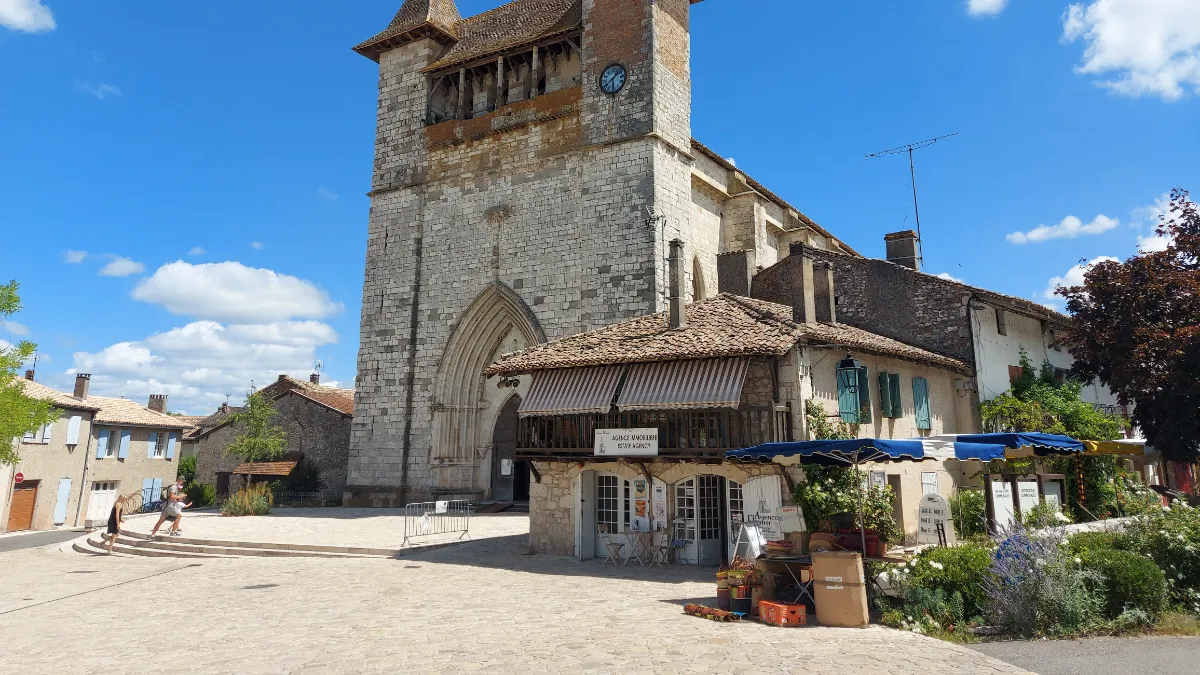
Villeréal is a medieval village organised around a large square. You’ll still see the covered walkways, historic houses, and the large wooden market hall that stands at the heart of public life.
Notre-Dame Church, built in the 13th century, stands not far from the square. Its Gothic architecture, buttresses, and defensive appearance are reminders that these small villages also had to protect their inhabitants.
Monflanquin
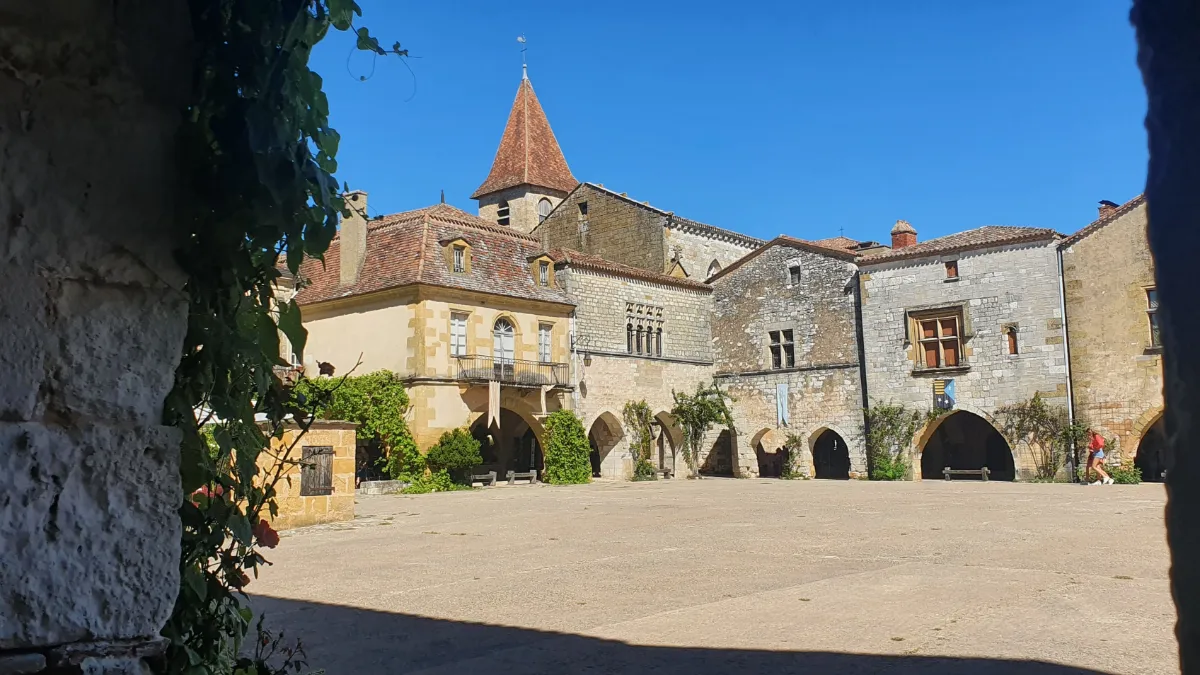
Monflanquin is a medieval village founded in the 13th century and set on a hilltop. You climb up to discover its regular layout, sloping streets, arcaded square, and broad views over the surrounding hills.
On the square, the so called House of the Black Prince catches the eye with its Gothic openings and arcades. The name is well known, but there is no proof that the English prince ever lived there.
Martignac
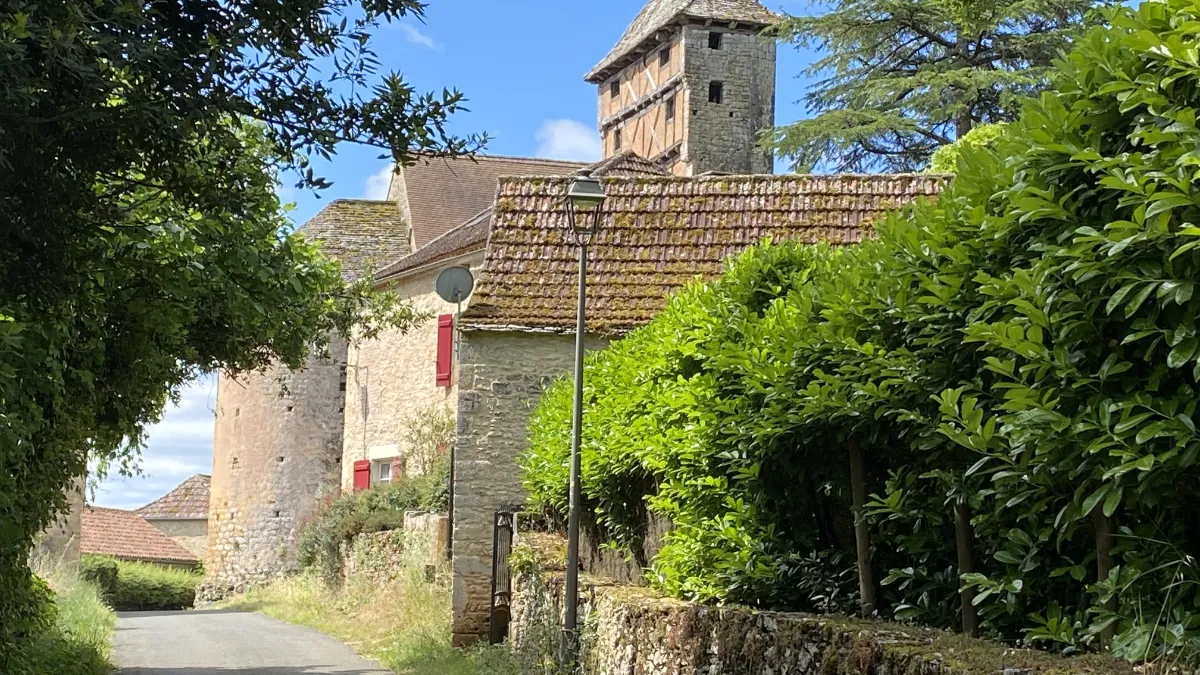
Martignac is a tiny hamlet, but its charm and its Romanesque church make it worth a stop. Inside, you’ll discover 15th century medieval wall paintings painted directly onto the walls.
EAST
Overview Table
| Name | Top Picks | Exp. Picks |
|---|---|---|
| Turenne | ||
| Collonges-la-Rouge | ✅ | ☑️ |
| Curemonte | ||
| Beaulieu-sur-Dordogne | ||
| Martel | ||
| Carennac | ||
| Loubressac | ||
| Autoire | ||
| Rocamadour | ✅ | ☑️ |
| Saint-Cirq-Lapopie | ✅ | ☑️ |
| Cardaillac | ||
| Capdenac-le-Haut |
Turenne
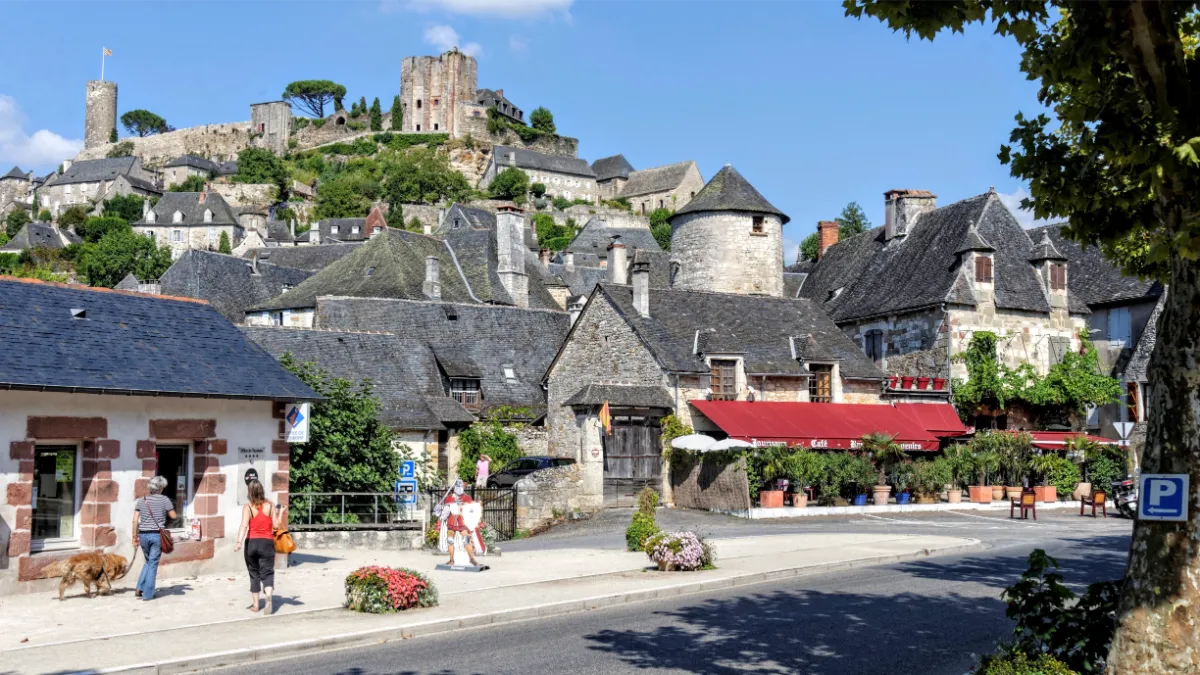
Turenne is a hilltop medieval village dominated by the remains of its former castle. You make your way up sloping lanes, passing stone houses, narrow passageways, and viewpoints overlooking the surrounding hills.
At the summit, two towers recall the site’s former power: the César Tower, dating from the 13th century, and the Treasury Tower, built in the 14th century. Together, they give the village a striking silhouette.
Collonges-la-Rouge
In Our Top Picks ✅
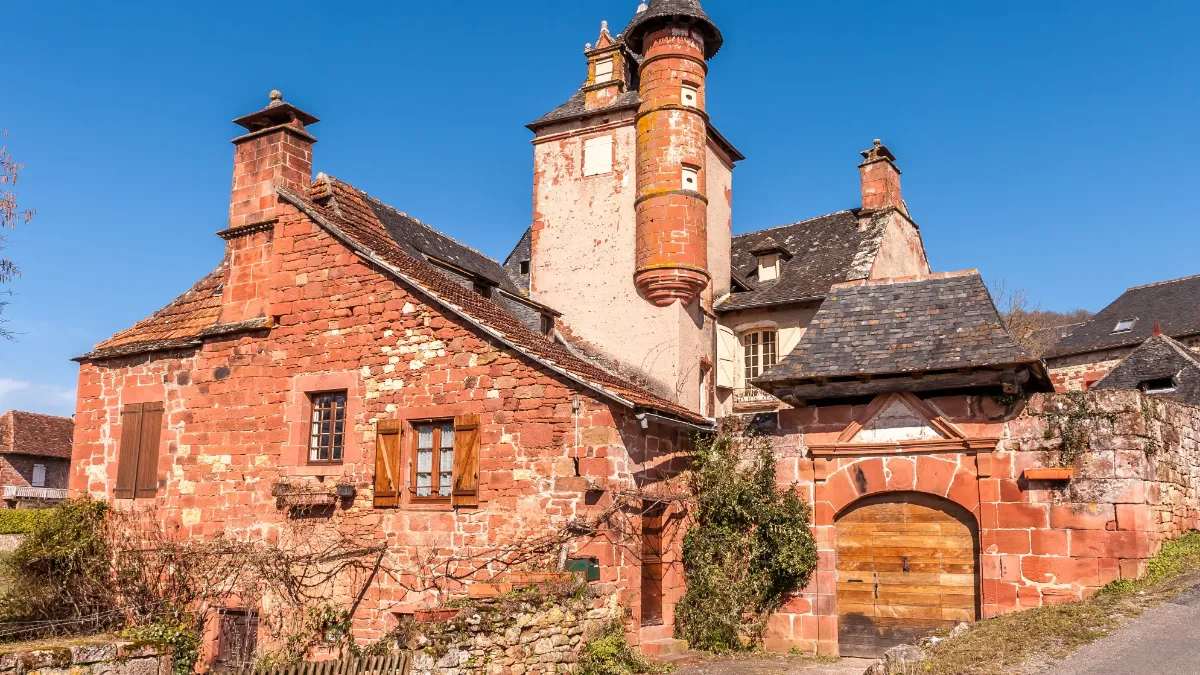
Collonges-la-Rouge immediately stands out because of its colour. The entire village seems to be built from red sandstone, a local stone that gives its walls, towers, and roofs a very distinctive character.
You walk among noble houses, small squares, turrets, vaulted passageways, and carved details. From the 16th century onward, the village attracted powerful families, which explains the richness of its architecture.
Curemonte
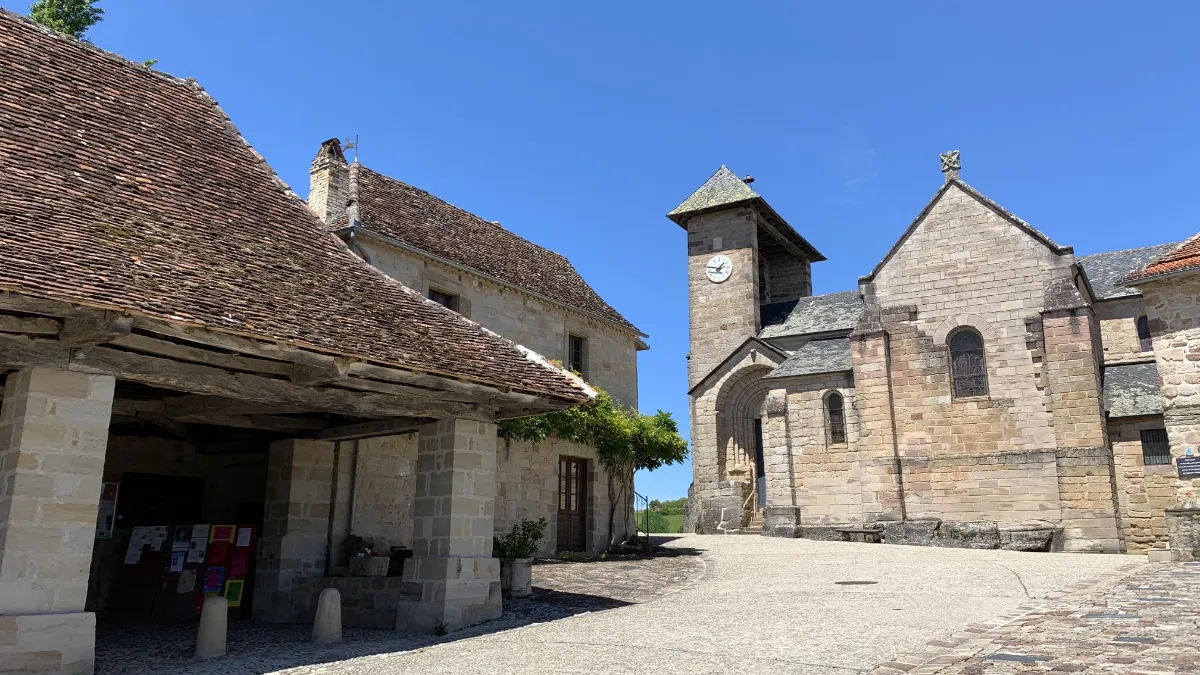
Curemonte stretches along a rocky ridge above a landscape of green valleys. The village has retained a very old character, with quiet lanes, noble houses, and pale stone towers built from local materials.
It is sometimes known as the village of threes: three castles, three churches, and three fountains. This concentration of notable buildings gives remarkable character to what is otherwise a very small village.
Beaulieu-sur-Dordogne
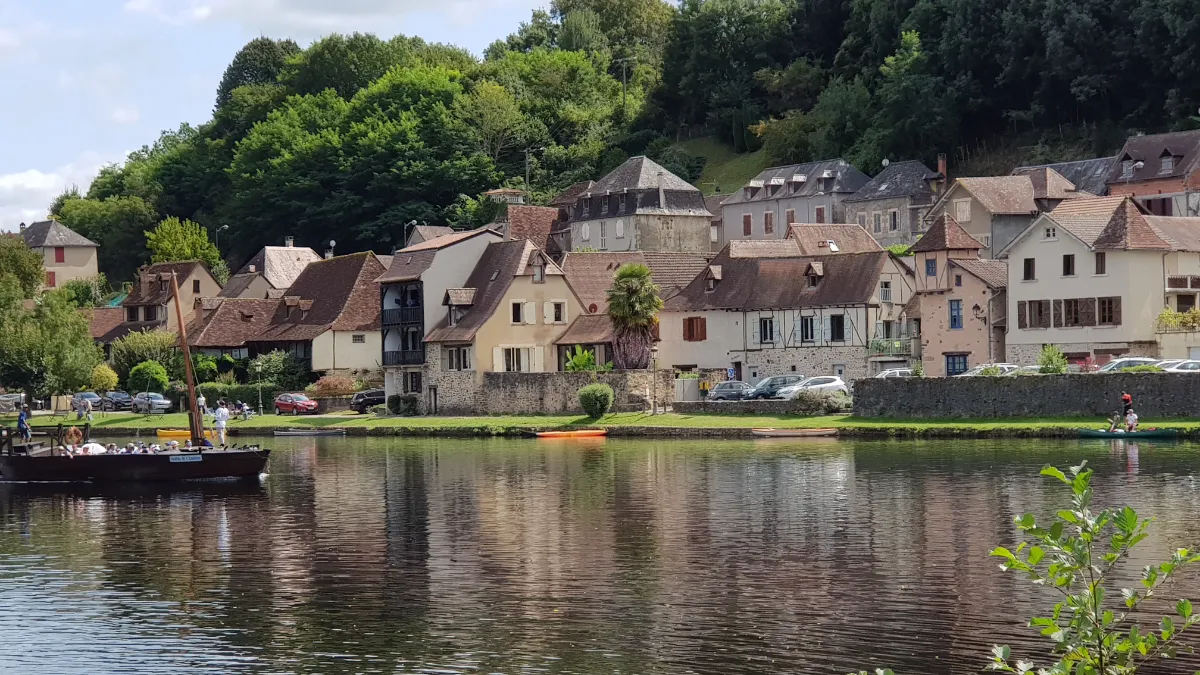
Beaulieu-sur-Dordogne developed on the banks of the Dordogne River around an abbey founded in the 9th century by a high ranking religious figure. You’ll find a compact historic village close to the river.
Saint-Pierre Abbey Church is the village’s main monument. Its south portal features a 12th century sculpted decoration above the entrance, with a large figure of Christ at its centre.
Martel
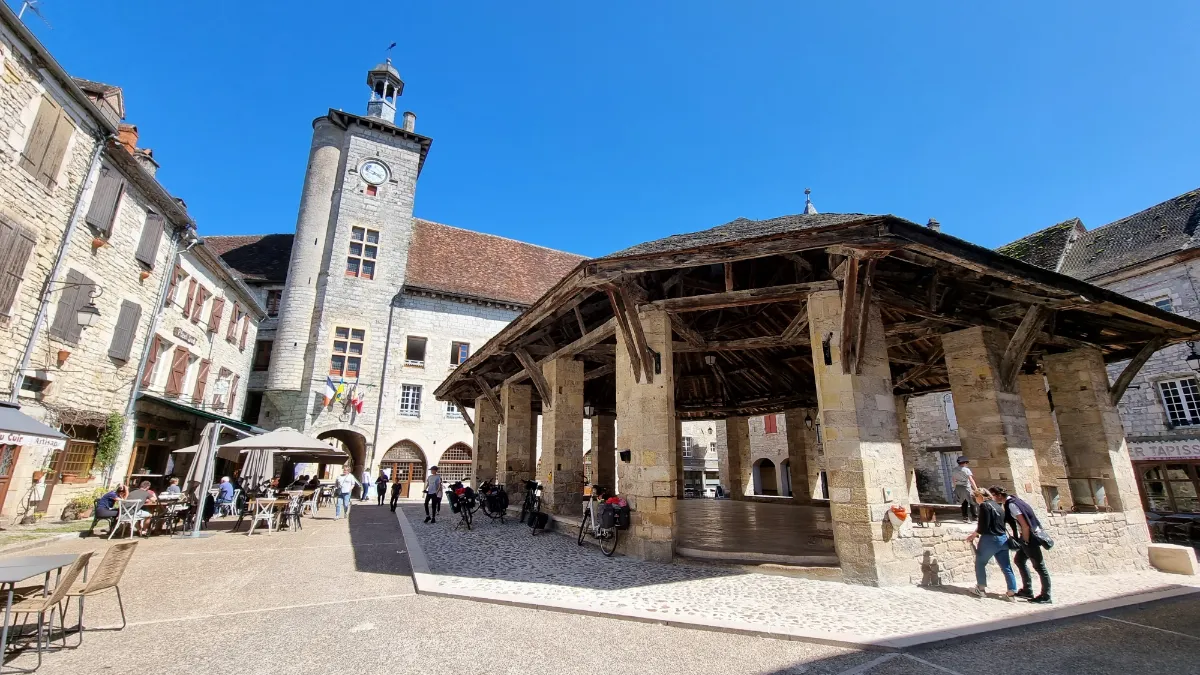
Martel is a remarkably well preserved medieval village, often nicknamed the village of seven towers. You walk through narrow streets lined with beautiful old houses, pointed arches, hidden courtyards, and impressive stone buildings.
Its architecture is among the most harmonious in the Dordogne Valley. The towers, market hall, and historic houses give the village a real sense of historical depth.
Carennac
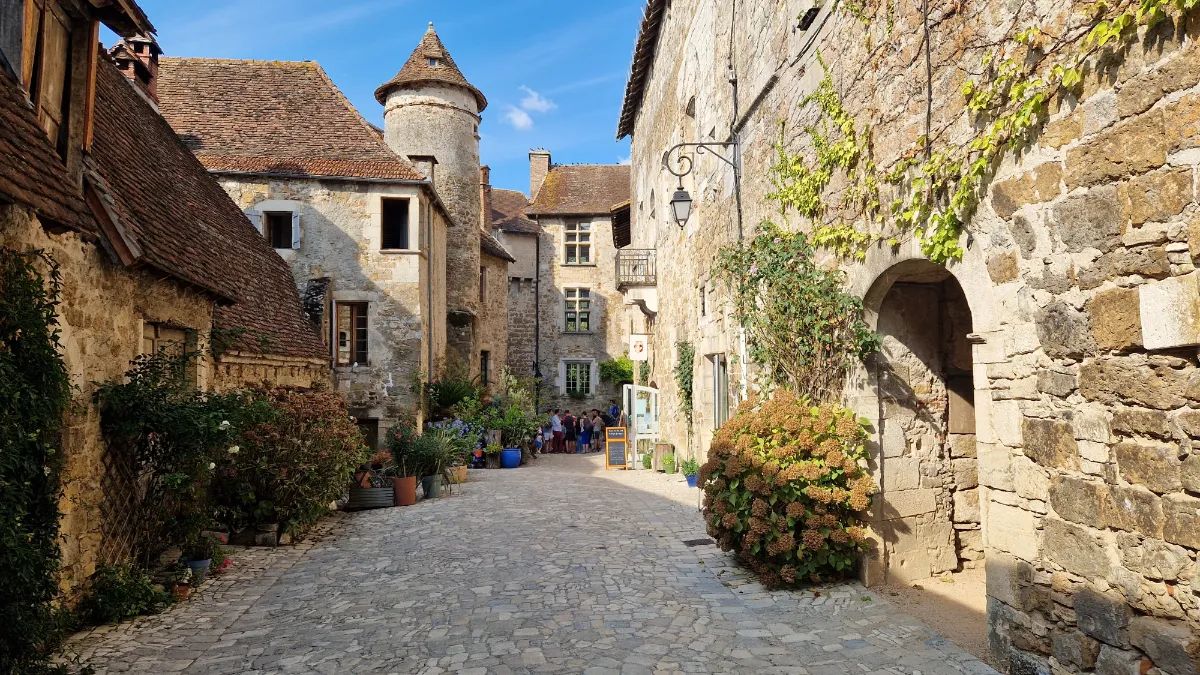
Carennac feels like a small medieval stone village, with varied rooftops, towers, turrets, chimneys, and irregular corners. The whole place forms a highly harmonious setting without feeling like an open air museum.
The heart of the village lies around a former priory, a small religious community that depended on a larger abbey.
Loubressac
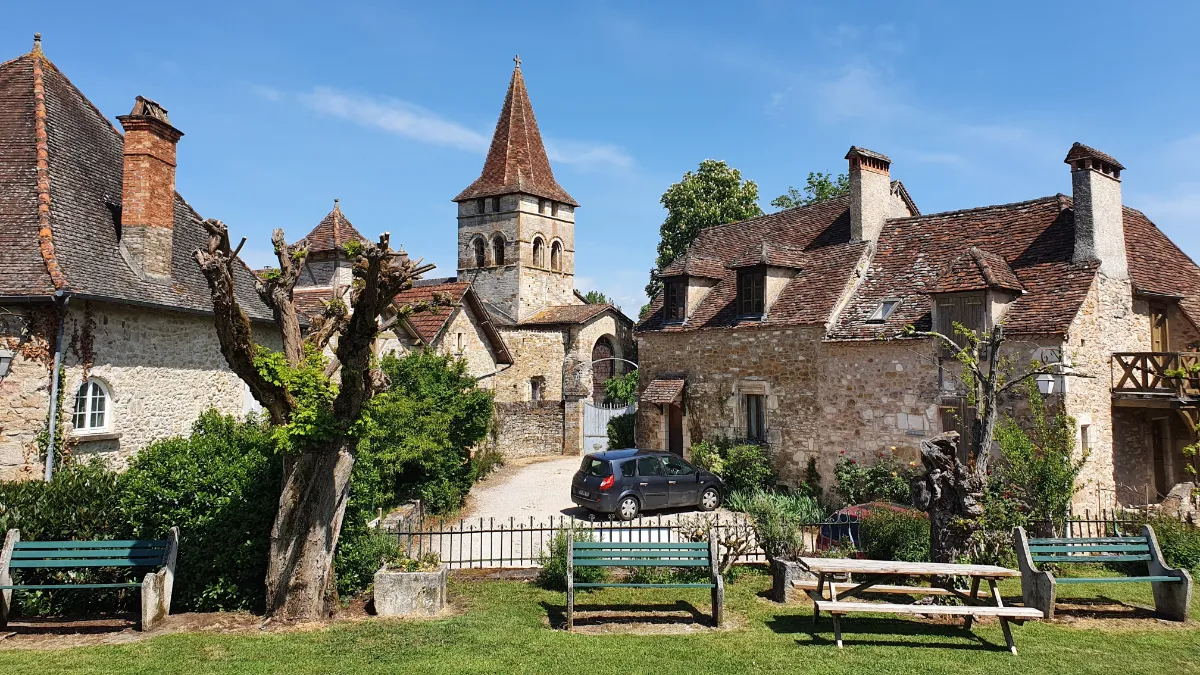
Loubressac is a fortified medieval village perched on the edge of a plateau. You’ll find houses built from pale limestone, quiet lanes, flowers, and sweeping views across the surrounding valleys.
The château, dating from the 15th and 17th centuries, dominates the landscape but is not open to visitors. The church, altered between the 14th and 16th centuries, preserves carved details including fish scale friezes and scallop shells.
Autoire
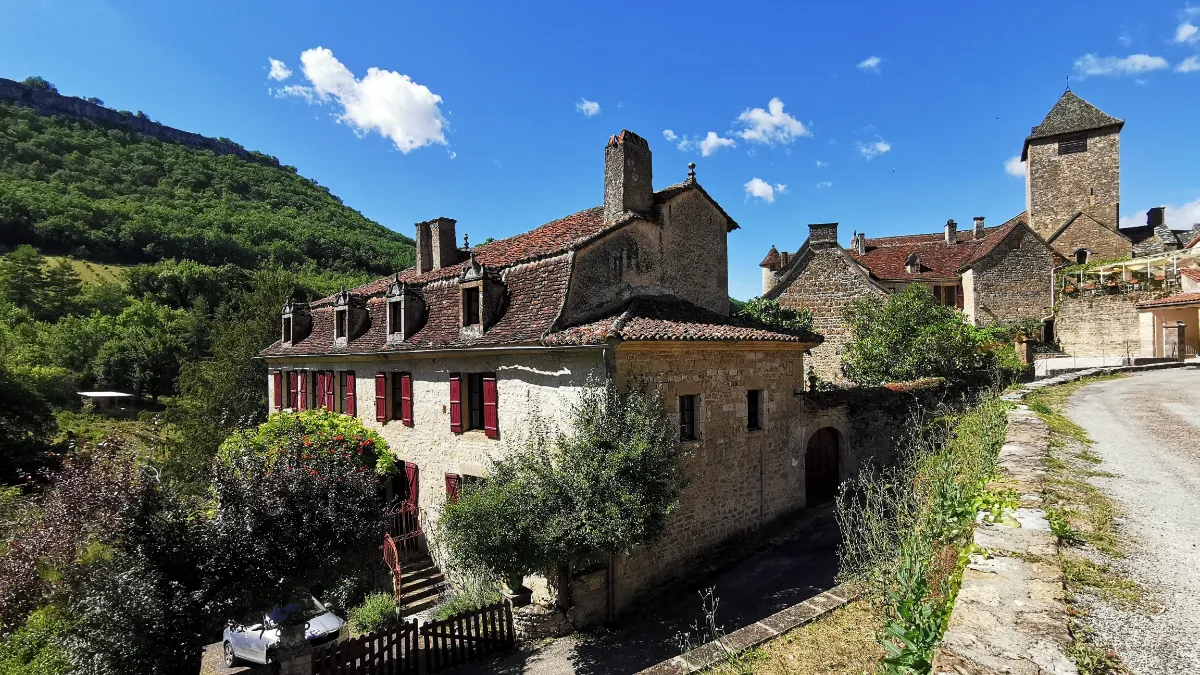
Autoire lies at the bottom of a wide valley dominated by pale cliffs. The village has a remarkable sense of unity, with medieval houses, stone barns, dark roofs, turrets, and facades covered in Virginia creeper.
As you continue up the valley, you reach a viewpoint overlooking the Cirque d’Autoire, a natural amphitheatre of cliffs. A 30 metre waterfall cascades nearby, close to the ruins of an old refuge carved into the rock.
Rocamadour
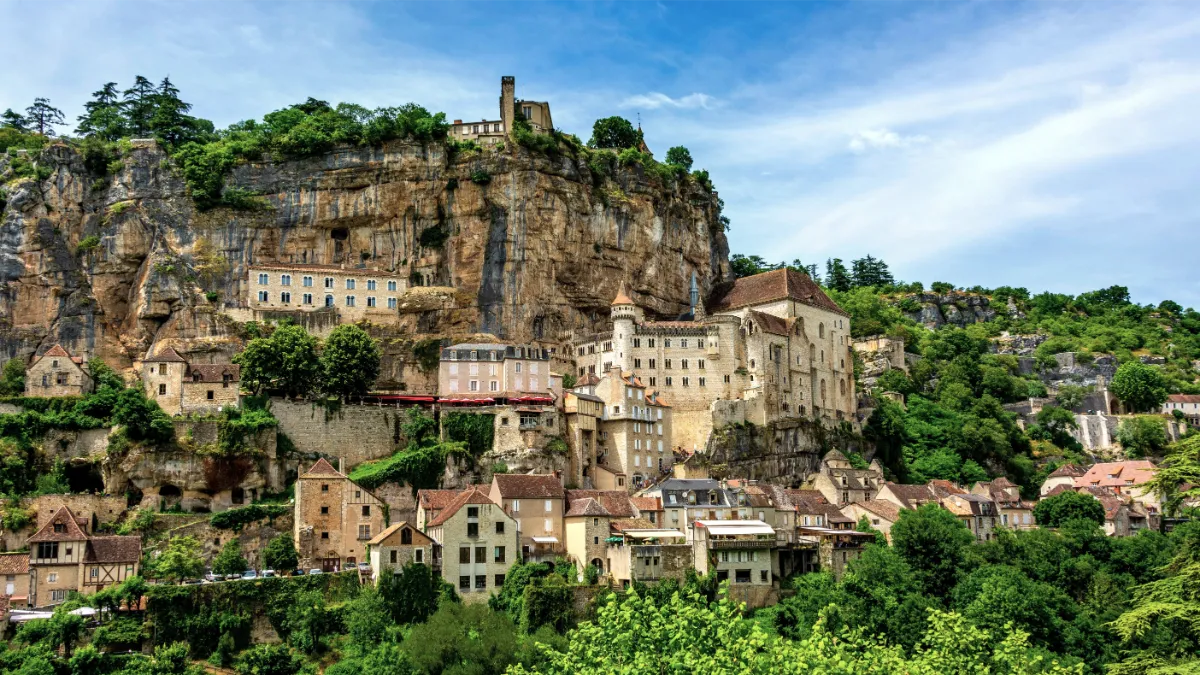
In Our Top Picks ✅
Rocamadour is striking for its almost impossible setting. Medieval houses and sanctuaries, religious pilgrimage buildings, cling to a vast cliff above a deep gorge.
You make your way up in stages, between the main street, staircases, and chapels. The site has been famous for centuries, but it remains above all spectacular for its balance of stone, empty space, verticality, and landscape.
Saint-Cirq-Lapopie
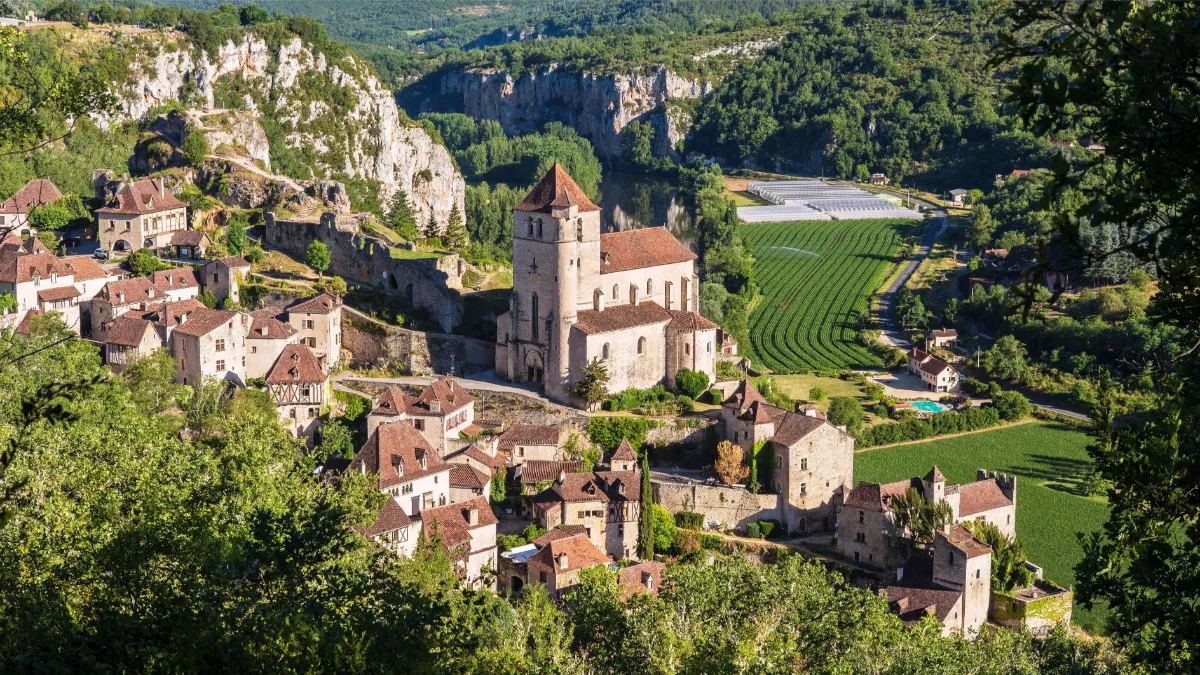
In Our Top Picks ✅
Saint-Cirq-Lapopie clings to a hillside 100 metres above the river. You’ll see tightly packed houses, steep roofs, and warm colours, with grey stone, ochre tones, and touches of flowers.
For a long time, the village had a defensive role, dominated by several castles and fortified houses. In the 13th century, it was also home to many craftsmen, including barrel tap makers, coppersmiths, and leather workers.
Cardaillac
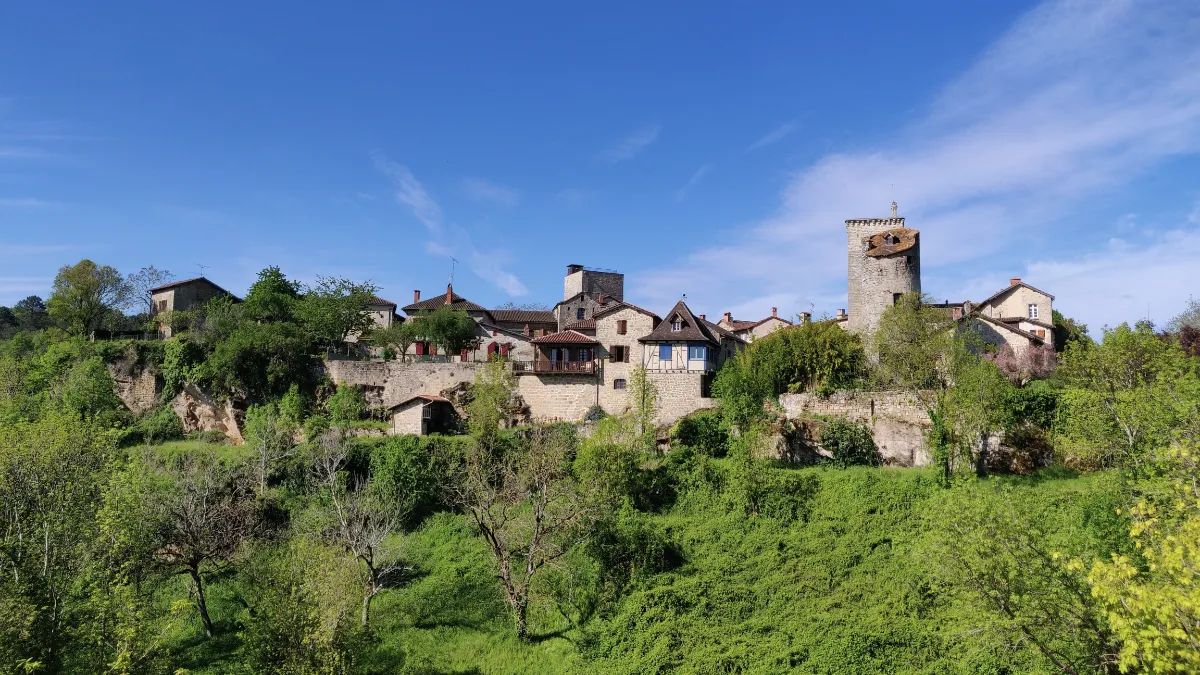
Cardaillac is a peaceful medieval village marked by its former fort and towers. You walk through narrow streets, past historic houses and defensive remains, in a setting that remains easy to understand and explore.
The village also preserves memories of everyday life in the past. A walking route through the streets reveals a clog maker’s house, a workshop, a chestnut drying house, a prune drying kiln, and an old school.
Capdenac-le-Haut
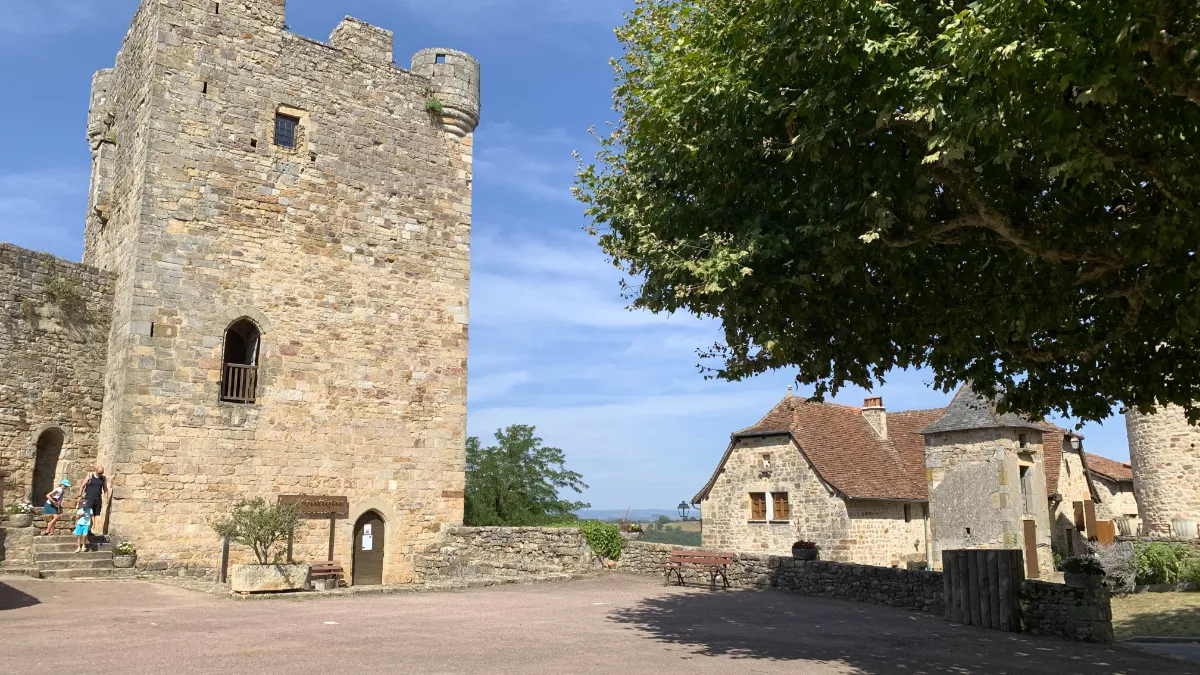
Capdenac-le-Haut is a fortified village perched on a rocky spur about 110 metres above the valley. From the top, you look out over the winding bends of the Lot River and the surrounding countryside.
The site was occupied as early as Roman times and later strengthened during the Middle Ages. You’ll find ramparts, a keep, cobbled streets, and remains linked to its former role as a fortress.