


INTERACTIVE MAP
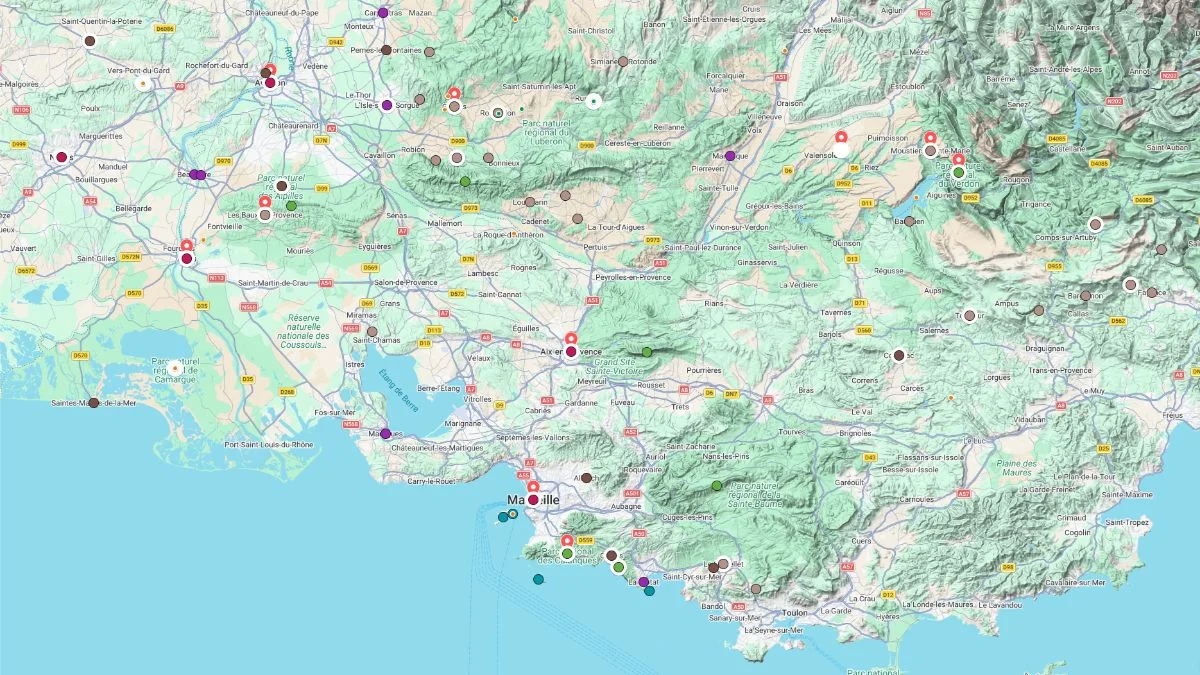
Click on the icon  in the top-right corner to view the map in full screen.
Show/Hide layers as needed.
After clicking on the image,
click on the icon  in the top-left corner to display the map legend.
Show/Hide layers as needed.
NORTH
Overview Table
| Name | Top Picks | Exp. Picks |
|---|---|---|
| Séguret | ||
| Montbrun-les-Bains | ||
| Venasque | ||
| Simiane-la-Rotonde | ||
| Fontaine-de-Vaucluse |
Séguret
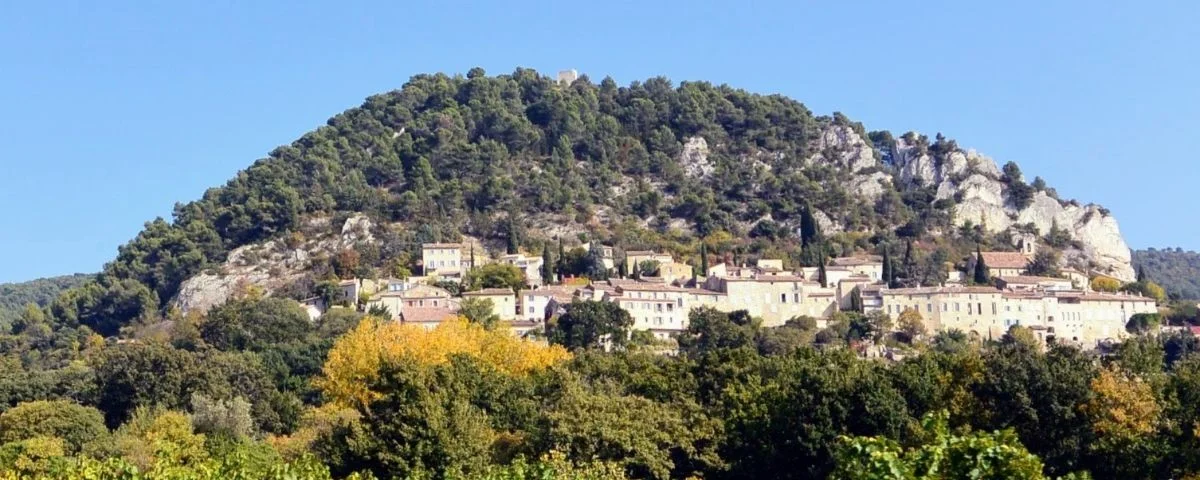
In Séguret, you arrive in a village clinging to the side of a rocky hill, so much so that the houses seem to rise straight out of the stone. The village still preserves traces of its 14th century defensive walls, large stone structures built to control and protect access.
As you wander through the cobbled lanes, you pass beneath restored covered passages, between pale façades, narrow stairways and shady corners. What makes Séguret special is the remarkable harmony of the whole village, where every turn reveals a steep lane, an old doorway, a glimpse over the valley or a fountain.
Montbrun-les-Bains
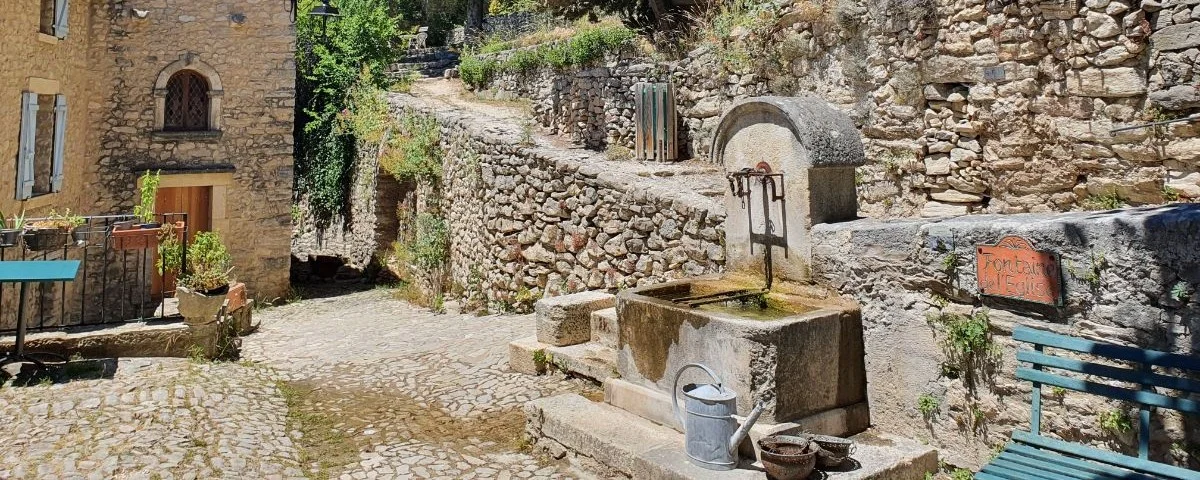
In Montbrun les Bains, you arrive in a hillside village where tall stone houses climb toward the ruins of an old fortified residence. The walk takes you along sloping cobbled streets, stairways, fountains and narrow passages between the houses. The landscape around you feels wide open, with lavender fields, dry hills, bright expanses and views of a famous mountain crowned by a white summit.
The name “les Bains” comes from the natural hot springs that have long been used for relaxation and spa treatments. The village is therefore both a historic place to explore and a destination devoted to well being. Take your time on the climb, the views change at every bend, with tiled roofs, ochre façades and sweeping panoramas of the surrounding hills.
Venasque
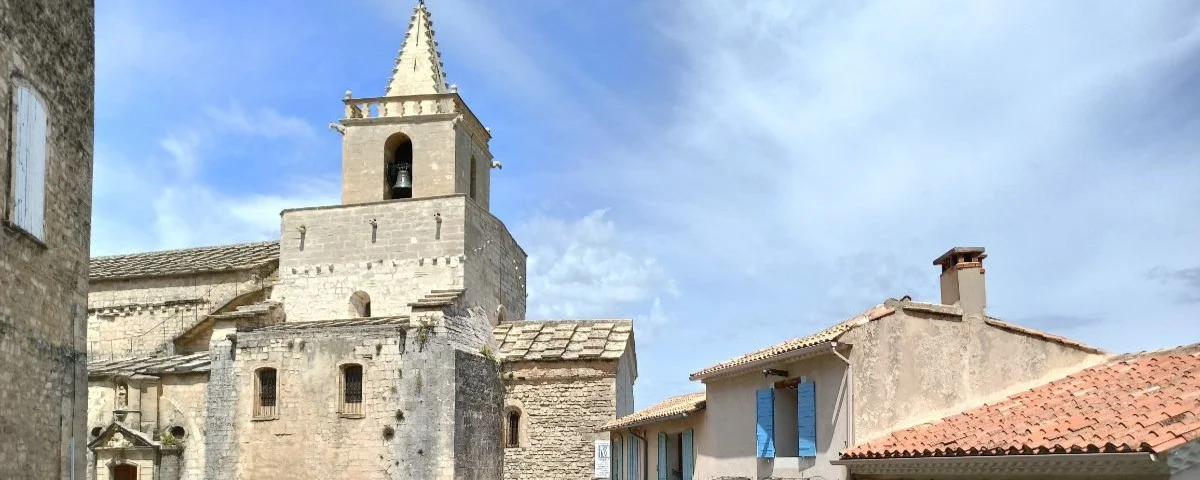
In Venasque, you arrive in a hilltop village built high above the surrounding countryside. Its narrow streets, stone houses and ancient walls immediately give the impression of a compact and well protected settlement. From the towers, the view opens onto orchards, fields and the great mountain visible in the distance.
The most remarkable monument is the ancient baptistery, a rare religious building once used for the baptism of the first Christians. Inside, its central basin, marble columns and carved details reveal an architecture far older and very different from that of a typical church. Much of Venasque’s appeal comes from this combination of spectacular setting, stone lanes and traces of a very distant past.
Simiane-la-Rotonde
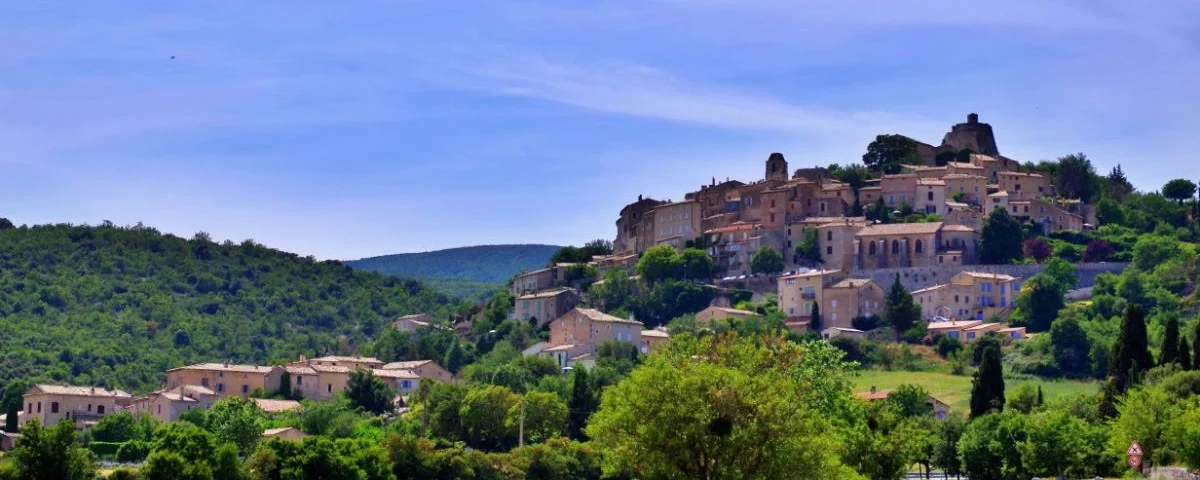
In Simiane la Rotonde, you discover a hilltop village surrounded by lavender landscapes, dominated by a great circular tower. This tower is the village’s main landmark, once part of a medieval castle and the origin of its name. As you climb through the cobbled streets, you pass stone façades, narrow alleys and carefully restored houses.
The village has kept a peaceful atmosphere, almost timeless, far from the busiest parts of Provence. Around you, the hills, fields and dry light create a sense of vast open space. The great round tower can be visited, and its interior impresses with its powerful proportions, carved columns and stone dome. From the terrace, the view stretches across the surrounding hills and fields.
Fontaine-de-Vaucluse
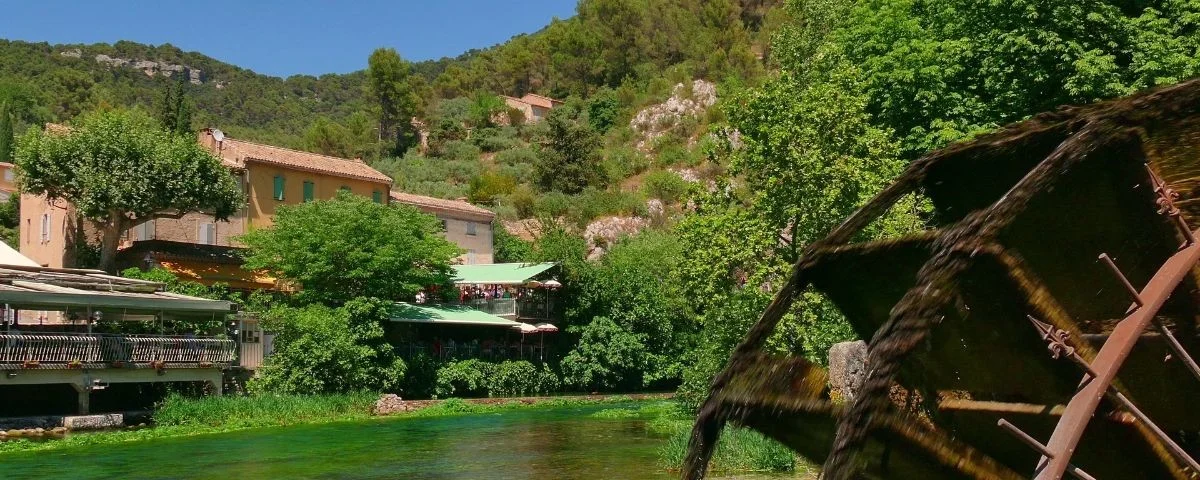
In Fontaine de Vaucluse, you discover a village set at the bottom of a valley enclosed by towering cliffs. Water is everywhere, accompanying the streets, lining the paths and bringing a refreshing atmosphere even in the height of summer.
The main walk leads to the spring, around twenty minutes from the centre. There, the river emerges from an immensely deep natural shaft, sometimes with such force that the water overflows and forms a cascade.
SOUTH
Overview Table
| Name | Top Picks | Exp. Picks |
|---|---|---|
| Baux-de-Provence | ✅ | ☑️ |
| Miramas le Vieux | ||
| Le Castellet | ☑️ | |
| Évenos |
Baux-de-Provence
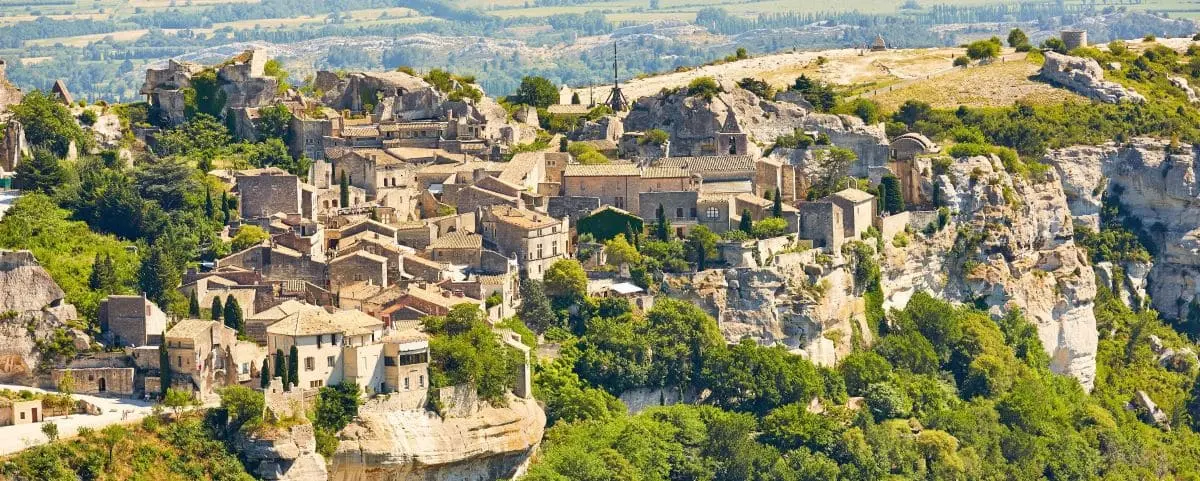
In Our Top Picks ✅
Altitude 200m (650ft)
Situated in the heart of the Alpilles mountains, Les Baux de Provence is a spectacular village perched on a rocky spur. With only a few hundred residents, it still overlooks one of the most iconic landscapes in Provence, a sea of vineyards, olive trees, and limestone rocks swept by the mistral wind. The village is literally built into the stone, so the houses seem to rise straight out of the rock, creating a unique mineral landscape.
The site first impresses you with its steep relief and with the presence of the citadel of Les Baux, a real eagle’s nest dominating the valley. From the ruins of the castle, you can see far across Provence, and on a clear day you can even glimpse the Mediterranean. This strategic position explains why the village used to have such strong military and political importance. Even today, the outline of the fortifications and the remains of the castle remind you of the major defensive role of this rocky promontory.
The narrow cobbled streets invite you to wander around. As you walk through the village, you discover remarkable architecture, old houses, vaulted passages, and small squares that show the rich history of Les Baux. Even though the village is small, it feels monumental, partly because of the pale stone that is typical of the Alpilles.
Miramas le Vieux
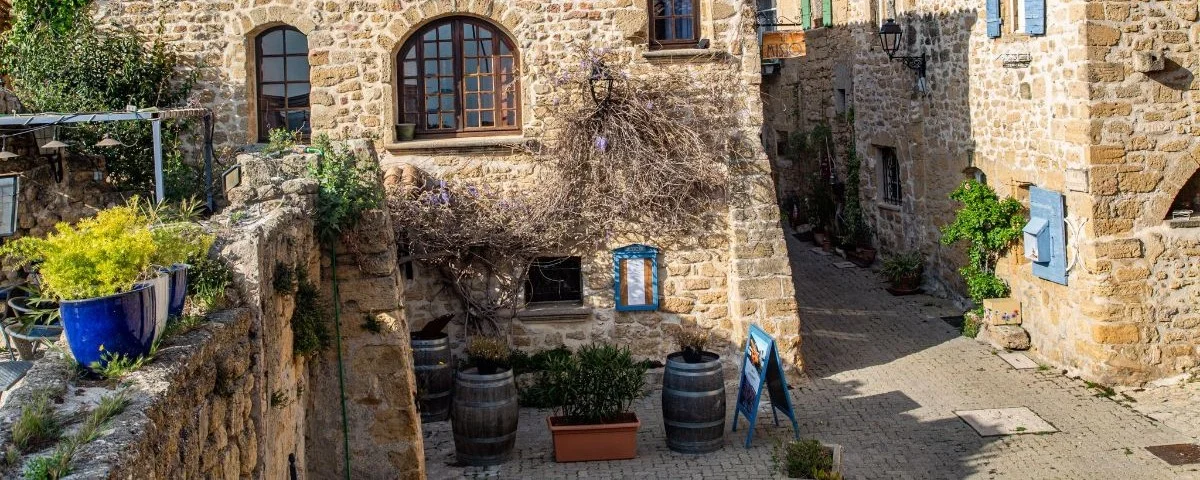
Perched on a hill overlooking a lake, Miramas le Vieux is the historic heart of the town of Miramas. This small Provençal village, set apart from the modern town and the industrial area around it, has kept an authentic, peaceful feel that really stands out from the more urban landscapes along the edge of the lagoon. People have lived in this region since Neolithic times, and its long history has been shaped by fishing and by the gradual growth of villages on the limestone hills around the water.
The old village is built around a maze of narrow lanes, vaulted passageways, and old houses packed closely together. As you wander through these little streets, you come across a typically Provençal heritage, pale stone facades, steep stairways, and quiet little squares where you can enjoy the mild climate. The peaceful atmosphere makes you want to stroll around and notice all the architectural details that show just how old the place is.
Le Castellet
In Our Expanded Picks ☑️
Altitude 240m (790ft)
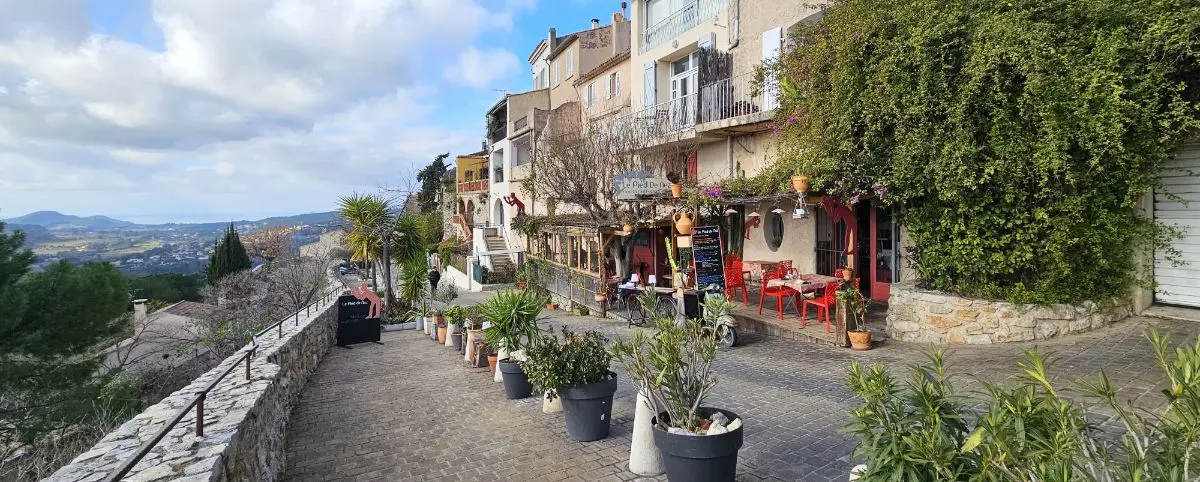
Perched between the hills and the sea, Le Castellet offers a wonderfully concentrated picture of old Provence. You step into a world of stone buildings, narrow passageways and flower lined streets, with an atmosphere that seems to have preserved centuries of tranquillity. The old defensive walls, the castle and the 12th century church give the village a distinctive and highly photogenic silhouette.
From the heights, the views open up in every direction. To the north, you can make out the Sainte Baume range, while to the south, the Mediterranean appears beyond the hills.
Évenos
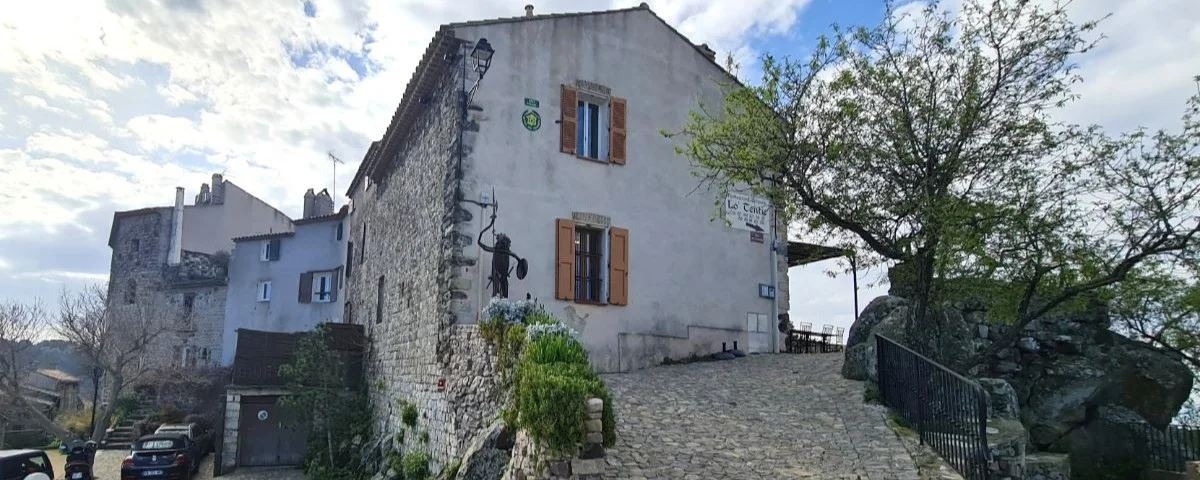
Perched on top of a huge ancient flow of dark rock, the old village of Évenos has a very different feel from the pale stone villages found closer to the coast. You reach it by a winding road that climbs uphill, before discovering a compact, rocky settlement that feels almost hidden away above the surrounding landscape.
The lanes are paved with pebbles and lined with dark houses built from local volcanic stone. This distinctive colour gives the village a striking, almost mysterious atmosphere, especially when the southern sunlight catches the walls.
In the centre, you’ll find a very old church surrounded by houses packed closely together. Higher up, the massive remains of an old watchtower recall the days when the site was used to keep an eye on the surrounding countryside.
LUBERON (CENTER)
Overview Table
| Name | Top Picks | Exp. Picks |
|---|---|---|
| Gordes | ✅ | ☑️ |
| Roussillon | ☑️ | |
| Oppède le Vieux | ||
| Ménerbes | ☑️ | |
| Lacoste | ||
| Lourmarin | ||
| Cucuron | ||
| Ansouis |
Gordes

In Our Top Picks ✅
Altitude 350m (1,150ft)
You’re perched up in the hills of the Luberon, Gordes is one of the most famous villages in Provence. Clinging to the side of a hill, this dry stone village overlooks the valley and gives you an amazing panorama over the landscapes of the Vaucluse. The houses, built with pale stones taken from local quarries, rise in terraces around the rock, creating a spectacular silhouette that’s one of the iconic images of the region. This dramatic setting explains a lot of the village’s tourist appeal, especially in summer.
The village is organized around a network of narrow, winding streets that weave between old houses. As you walk through them, you discover typically Provençal heritage, sun-worn façades, shaded little squares, and terraces looking out over the valley.
With its spectacular panorama, stone architecture, and still-vibrant rural traditions, Gordes perfectly captures the image of a hilltop Provençal village in the heart of the Luberon.
Roussillon
In Our Expanded Picks ☑️
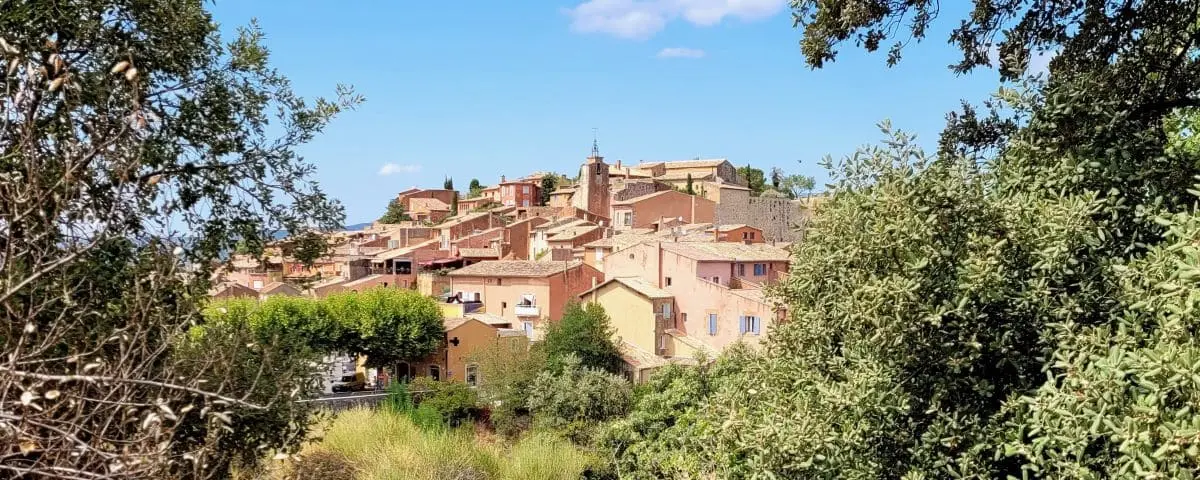
Nestled in the heart of the Luberon, the village of Roussillon is one of the most unusual places in Provence. Here, the landscape and the architecture blend into one, the village really looks like it rises straight out of the coloured earth it was built on.
The houses show off a whole range of warm shades, red, orange, ochre and pink, all coming directly from the natural pigments taken from the nearby quarries since the end of the 18th century. This presence of ochre gives the whole place an almost unreal atmosphere, made even more striking by the Provençal light, which makes the facades glow all day long.
And only a few minutes away on foot, thers is the Ochre Trail. Set out through former quarries, this path takes you past cliffs and landscapes shaped by erosion, revealing every shade of the natural pigments. It is easy to walk and lets you get a close look at these amazing formations, the ones that made the site famous and explain the village’s very special identity.
Oppède le Vieux

In the Luberon, the commune of Oppède is actually made up of two separate villages: Oppède les Poulivets, down on the plain, and Oppède le Vieux, up on the hillside, one of the famous perched villages of the Luberon.
Oppède le Vieux has a very distinctive atmosphere that really brings its past back to life. Even though the village has been carefully restored in recent years, for a long time it was seen as an abandoned village after the 19th century. In spite of all that renovation, it has still kept a lot of its old world charm.
One of the best parts of your visit is just wandering through its little streets. Asphalt still has not made its way up into the upper part of the village: the paths are either paved with stones or simply left as dirt tracks, which makes the whole place feel even more authentic, like you are stepping back in time.
One of the main sights you should not miss is the Notre Dame d’Alidon collegiate church, which stands above the village. Part of its restoration is funded by the Oppède Festival, a cultural event held every year over four days, usually at the end of July or the beginning of August. Theatre, comedy, and music all come together there.
Ménerbes
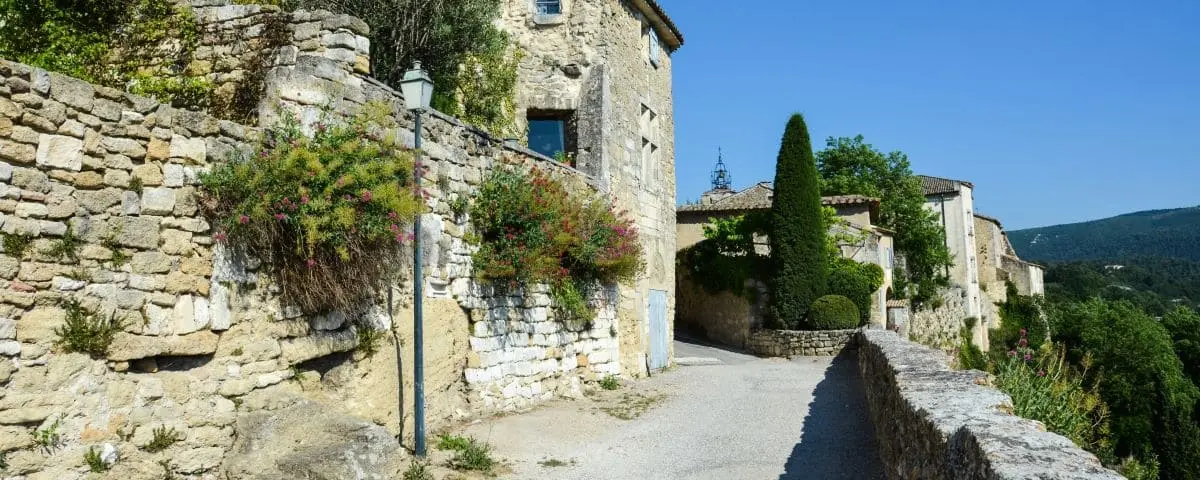
In Our Expanded Picks ☑️
Perched on a steep rocky outcrop in the Luberon, Ménerbes looks like a long fortress village overlooking the Provençal landscape. It stretches along the top of the hill, with a distinctive silhouette you can spot from far away. Before the peak tourist season arrives, the village feels almost sleepy, wrapped in the peaceful atmosphere that’s so typical of inland Provence. But as soon as the weather turns nice, it draws plenty of visitors who come to admire one of the loveliest villages in the Luberon.
What really wins you over in Ménerbes is taking the time to wander through its little streets. The old houses, packed tightly along the ridge, reflect its defensive past and long history. As you make your way through the narrow lanes, you come across spectacular views over the surrounding countryside, with vineyards, olive groves, and rolling hills.
Over time, the village also attracted a lot of artists. Famous visitors included painters like Nicolas de Staël and Pablo Picasso. Picasso even had a special connection to Ménerbes, he gave a house there to his lover and muse Dora Maar as a parting gift when they split up. That story says a lot about the village’s role as a haven for artists and intellectuals drawn in by the light and the quiet of Provence.
Lacoste
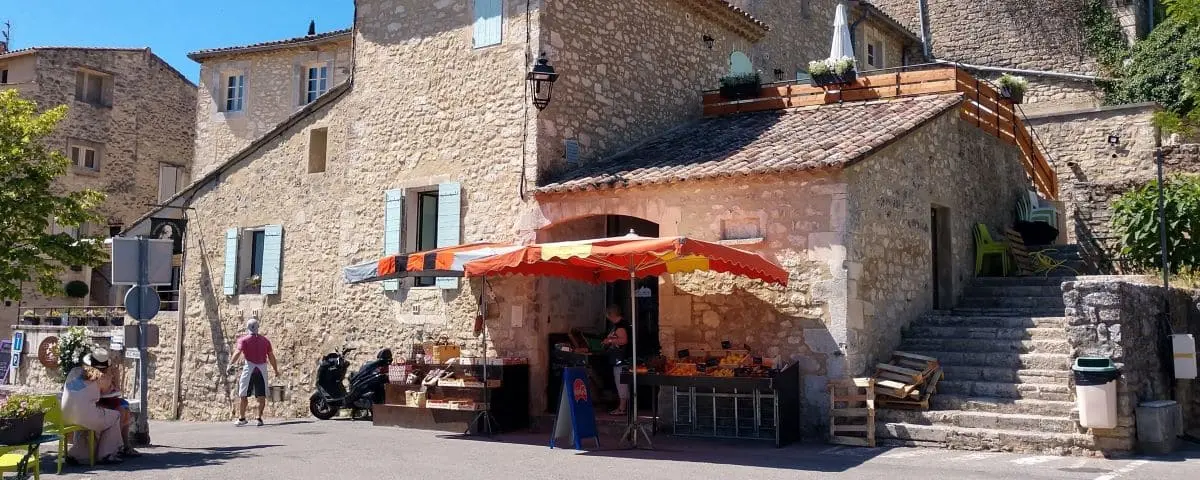
Perched on the foothills of the Luberon, looking out toward the village of Bonnieux, Lacoste is one of those Provençal villages whose charm comes as much from its history as from its unique atmosphere. Its narrow cobbled streets wind their way between old stone houses up to the highest part of the village, overlooked by the ruins of the château. The château is closely tied to the story of the Marquis de Sade, who settled there in the 18th century and stayed for several years after the various scandals that marked his life.
Over time, the château became the symbol of the village. It was abandoned for a long time, then found a new life when the fashion designer Pierre Cardin became its owner at the beginning of the 21st century. He launched an arts festival there, held in the quarries around the château, keeping alive a cultural tradition that is now deeply rooted in the local landscape.
Lourmarin
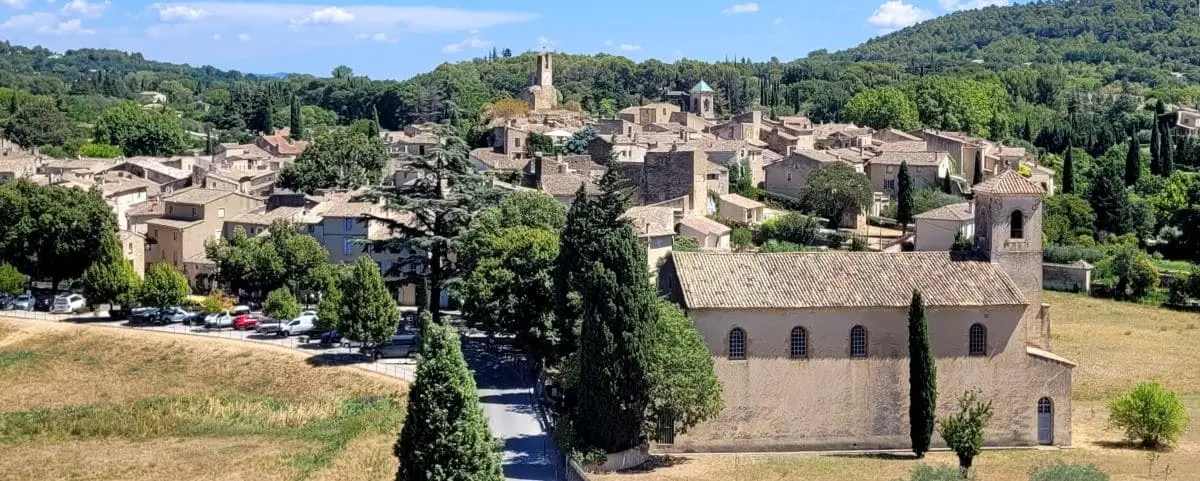
Set at the entrance to the valley that cuts through the Luberon range, the village of Lourmarin holds a strategic spot because it stands at the end of the only natural passage through the Luberon. It played an important role for centuries in travel between the north and south of the massif. Today, you can recognize the village by the outline of its three bell towers.
The village was abandoned in the 14th century, then repopulated, and over time it grew into a lively and much visited place. Even with all its popularity, it still keeps a real, authentic charm that you notice when you take the time to wander through its streets.
Lourmarin’s heritage is dominated by its château, which watches over the entrance to the valley. Built in the 15th century, then reshaped in the 16th century in a Renaissance style, it stands out for its architecture and the richness of its furnishings. After being abandoned during the Revolution, the building was saved at the beginning of the 20th century and turned into a foundation created to host artists. Even today, the château welcomes musicians and creators in residence, and regularly hosts concerts and exhibitions.
Cucuron
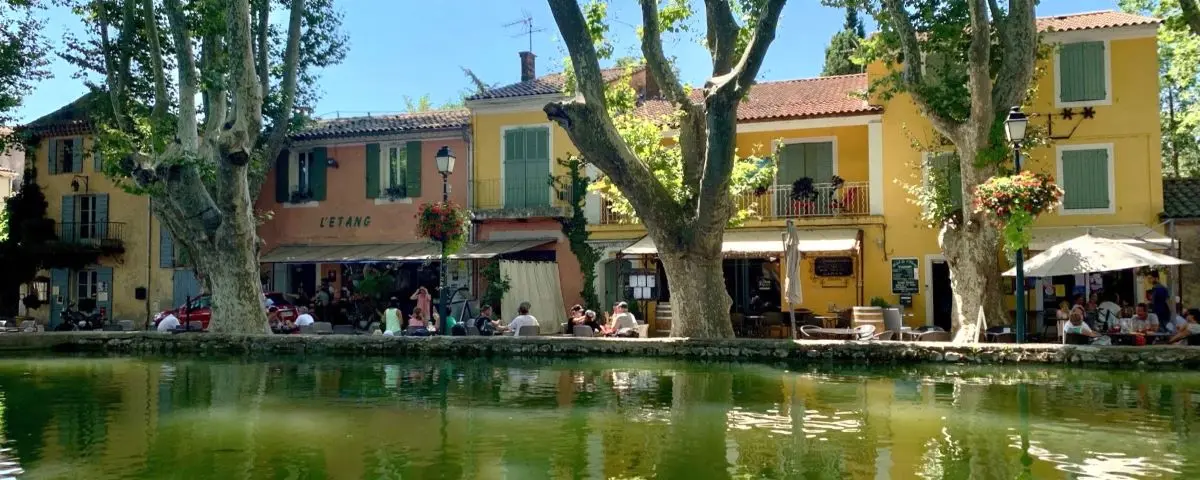
Tucked away in the southern Luberon, the village has kept its traditional character and that gentle way of life that’s so typical of the region.
The heart of Cucuron is built around the feature that makes it so distinctive, the Étang de la Bonde, more simply known as the Cucuron pond, a large pool of water lined with majestic plane trees. This stretch of water, something quite rare in Provençal villages, gives the place a very special charm. Surrounded by terraces and restaurants, it’s a favorite spot for a stroll, where locals and visitors come together in the shade of the trees, especially on hot summer days.
Ansouis
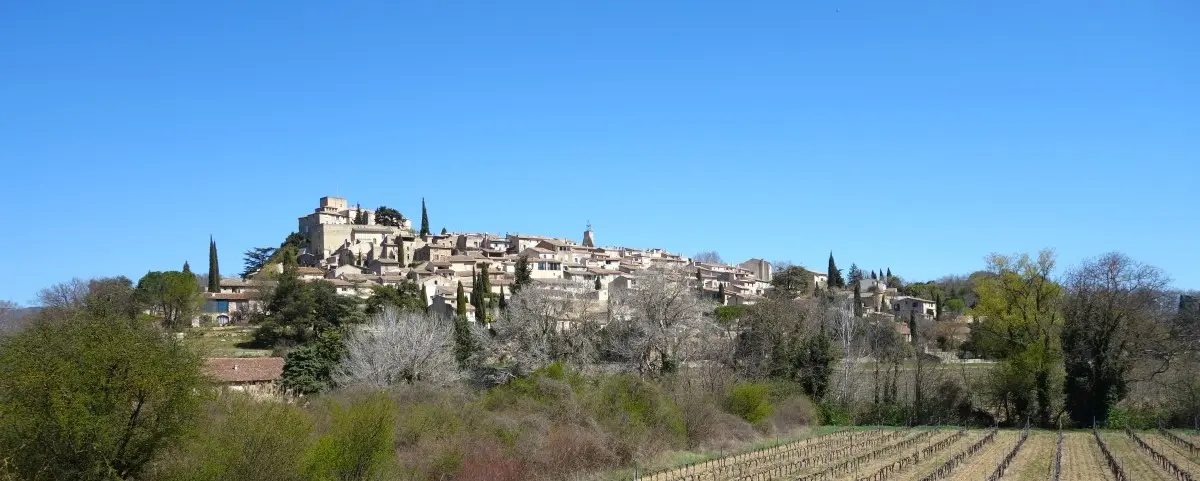
Perched on a hill in the southern Luberon, Ansouis is built around its château, which for centuries has been the historical and symbolic heart of the village.
You can best discover the village on foot, wandering through its narrow streets as they climb uphill. From the top of the hill, you get sweeping views over the Luberon countryside, and you can really sense Ansouis’s strategic position, once protected by its château and ramparts. The atmosphere is typically Provençal, with pale stone warmed by the sun, quiet little squares, and old façades creating a setting full of charm.
EAST
Overview Table
| Name | Top Picks | Exp. Picks |
|---|---|---|
| Sisteron | ☑️ | |
| Moustiers-Sainte-Marie | ✅ | ☑️ |
| Bauduen | ||
| Bargème | ||
| Mons | ||
| Fayence + Tourettes | ||
| Seillans | ☑️ | |
| Bargemon | ||
| Châteaudouble | ||
| Tourtour | ☑️ |
Sisteron
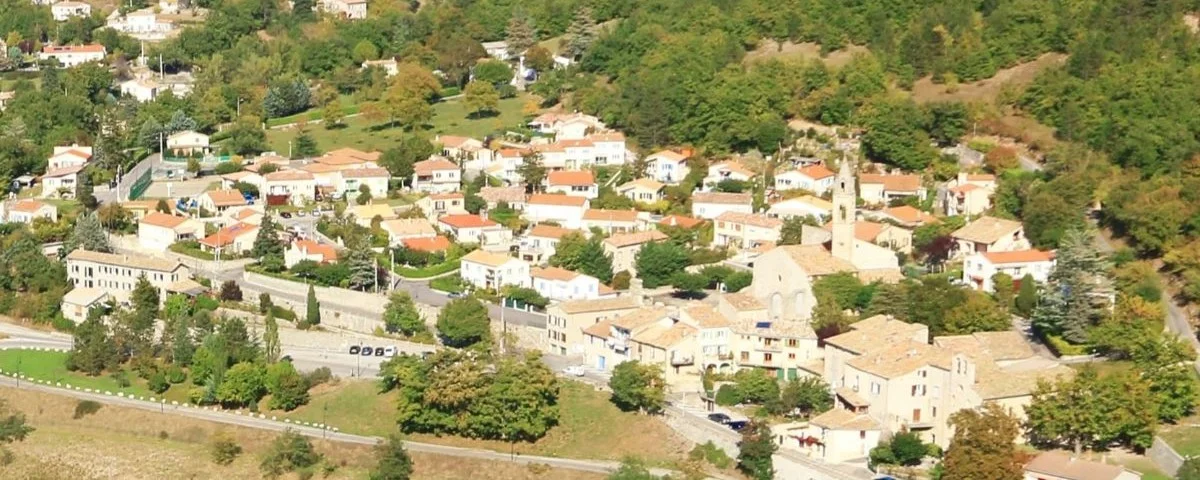
In Our Expanded Picks ☑️
With its spectacular citadel towering above it, and tucked between the mountain and the river, Sisteron gives you the striking picture of an old town clinging to its natural landscape. What you notice first is a tight maze of rooftops and a real labyrinth of narrow streets, typical of medieval Provençal towns, spreading out at the foot of the huge fortress overlooking the valley. Facing the town, you also see a massive limestone cliff that makes the whole setting even more dramatic.
Even though the area was hit by heavy bombing in August 1944, Sisteron has managed to preserve most of its historic heritage. Today, the old town, the cathedral, and above all the citadel are its main attractions. These monuments remind you of its historic role as a stronghold controlling access to the Alpine valleys and to Provence.
At the foot of the town, the banks of the river give you a relaxing spot to unwind, with a leisure lake set up for summer swimming and outdoor activities, all while enjoying a lovely view of Sisteron’s silhouette and its citadel.
Moustiers-Sainte-Marie
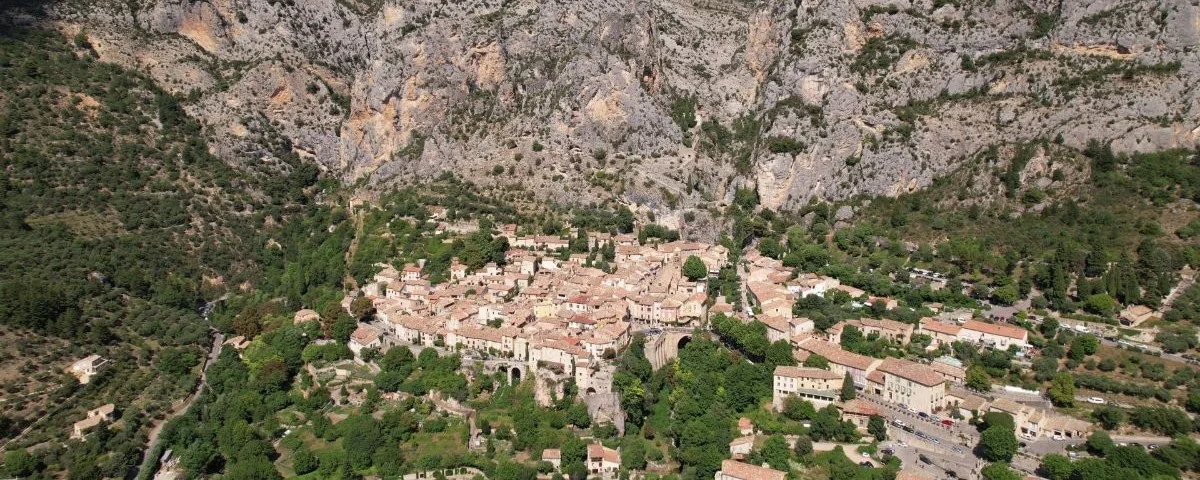
In Our Top Picks ✅
Altitude 640m (2,100ft)
You’re right in the heart of the Verdon canyon when you arrive in Moustiers-Sainte-Marie, one of the most iconic villages in Provence. The village clings to the mountainside and sits beneath the chapel of Notre Dame de Beauvoir, looking almost suspended between the sky and the rock, with a spectacular setting that perfectly reflects the Alpine landscapes of Provence.
As you walk through the village, you move along a maze of cobbled streets, small shaded squares, and old washhouses that quietly tell the story of its past and the gentle rhythm of local life. A river runs through the village and is crossed by several small humpback bridges, adding even more charm to the picturesque scenery. The atmosphere feels authentic and almost timeless, which is exactly why so many visitors fall in love with the place.
Moustiers-Sainte-Marie is also famous for its long tradition of faience pottery, an art that has shaped the village’s identity for centuries. Workshops and small boutiques still keep this craft alive today, producing decorative pieces and fine tableware that have become one of the symbols of the region.
Bauduen
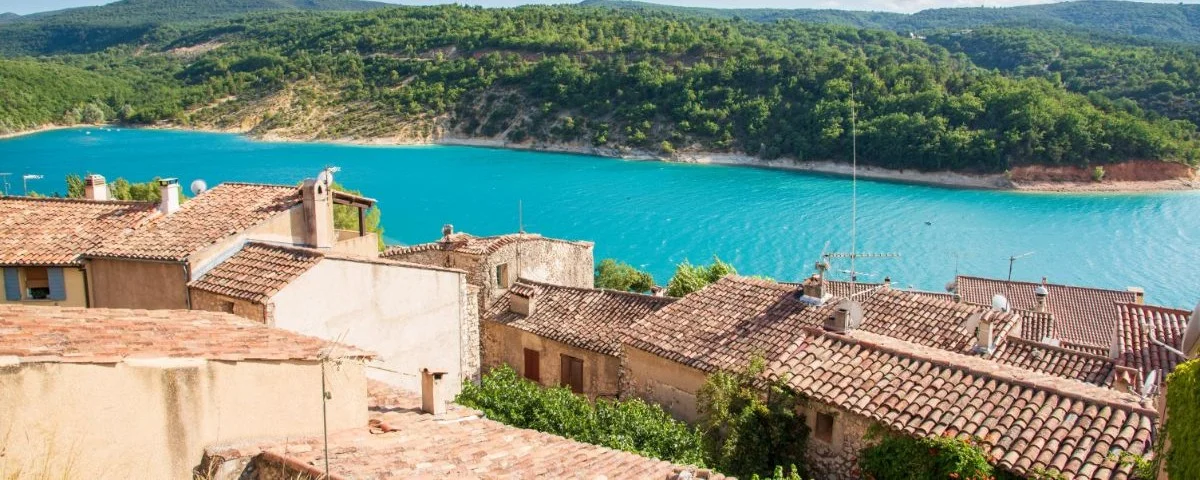
Set on the shores of Lake Sainte Croix, the village of Bauduen is one of those little Provençal villages you come to as much for the beauty of the scenery as for its peaceful atmosphere.
Bauduen first wins you over with its exceptional location by the lake. This vast stretch of water, created by the Sainte Croix dam, draws many visitors who come to enjoy its bright scenery and calm waters. The village gives you a wonderful setting for water activities, or simply for strolling along the shore and admiring the surrounding landscape.
Bargème
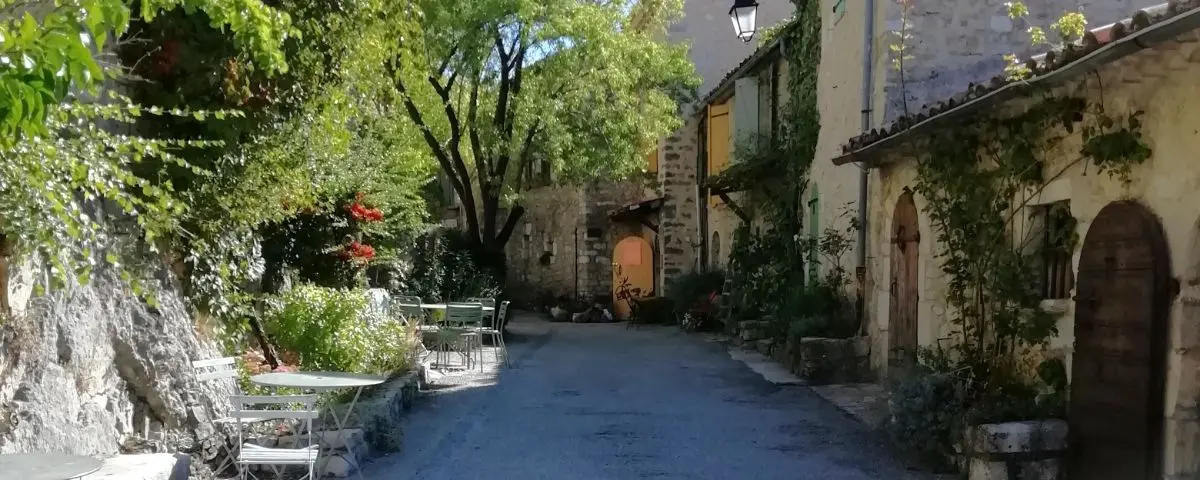
Altitude 1070m (3510ft)
Bargème, tiny and stunning, is perched high up in the Verdon hills. From its natural cliffside, it looks like it’s reaching for the sky. Surrounded by a wall with two 16th-century gates, the village reveals itself as you weave through narrow lanes, mossy stairways, beautifully restored old houses, and a quiet Romanesque church.
Watching over it all is the striking ruin of its château, giving Bargème a dramatic medieval silhouette. This fortress castle shows just how strategic the village once was, sitting on a rocky spur with jaw-dropping views the surroundings
Remote, peaceful, and deeply authentic, Bargème feels like a place made of silence and sky, where you float somewhere between history and the vastness of nature. It’s a true haven for anyone who loves heritage and big, breathtaking landscapes.
Mons
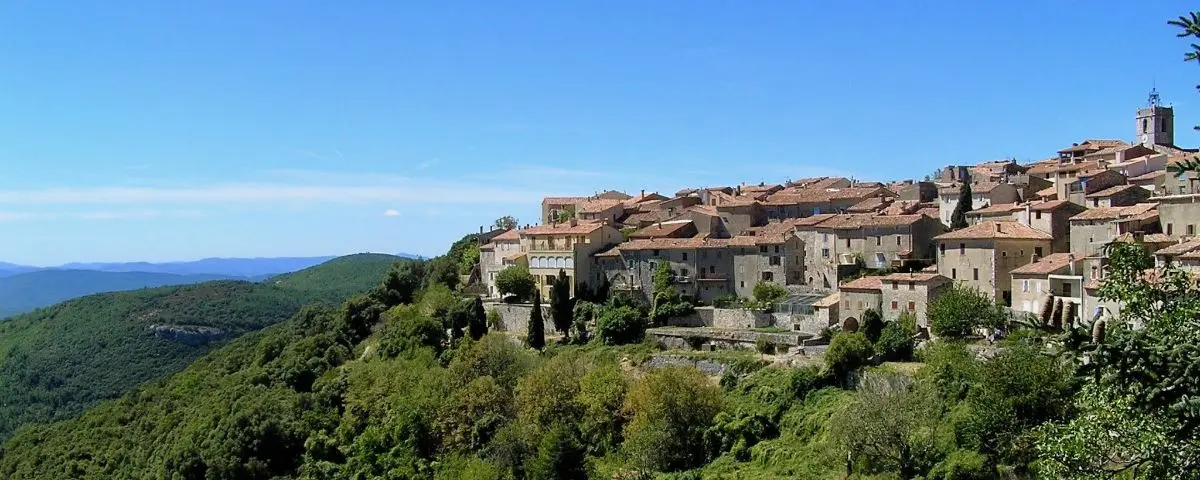
Altitude 810m (2660ft)
Mons is a hilltop village that opens up onto an extraordinary panorama of the region. On a clear day, you can even catch a glimpse of the Corsican peaks, a rare, dizzying sight. The village has kept a strong medieval feel, with a 13th-century church, narrow little streets with charming names, vaulted passageways, wrought-iron signs, and roofs weighed down with stones to resist the mistral winds, all signs of a tough, vibrant rural past.
But Mons isn’t just about the Middle Ages, it’s also a prehistoric site. A Megalith Trail takes you to no fewer than 11 ancient monuments, including the Riens dolmen, just 1.5 km from the village. With two large arched stones and a burial chamber, it shows just how far back human presence goes in this area.
Fayence + Tourettes
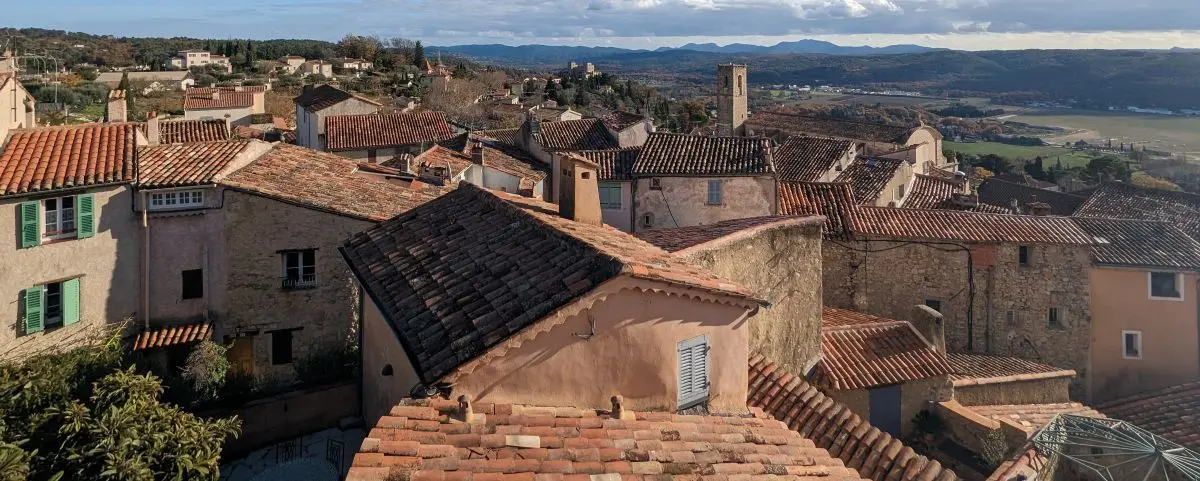
Altitude 350m (1150ft)
Fayence
Fayence is one of the most beautiful villages in the Var backcountry and still holds tight to its authenticity. Its charming, tangled streets are perfect for a stroll, from the fortified gate from the 14th century, to the old communal oven, the 18th-century parish church, and up top, the Clock Tower with its graceful wrought-iron campanile. From there, you get a sweeping view over the surrounding plain, often dotted with gliders drifting silently overhead, Fayence is actually one of the top gliding spots in France.
Tourettes
Tourrettes, often overshadowed by its neighbor Fayence, is still much worth your attention. Perched on a hill and full of charm, it stands out thanks to its artistic vibe. As you wander through its gently sloping streets, you’ll come across all kinds of artworks, turning the whole village into an open-air gallery for anyone strolling by.
Seillans
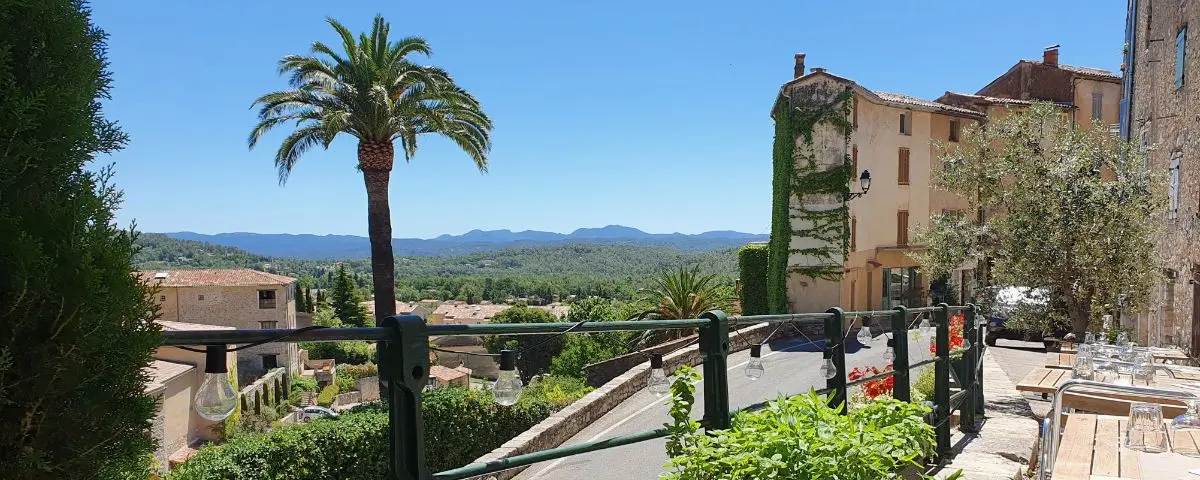
In Our Expanded Picks ☑️
Altitude 400m (1310ft)
Perched up in the hills, Seillans looks like something straight off a postcard, a real maze of narrow winding alleys with vaulted passages, old washhouses, trickling fountains, shady little squares, and bits of ancient ramparts here and there. You enter the village through a 12th-century gate that sets the tone, and every corner feels like it’s telling a quiet story of Provence.
Culture is alive and well too. There’s the well-known pottery market in mid-August, one of the region’s most respected, where local traditions take center stage in a warm, friendly atmosphere.
Bargemon
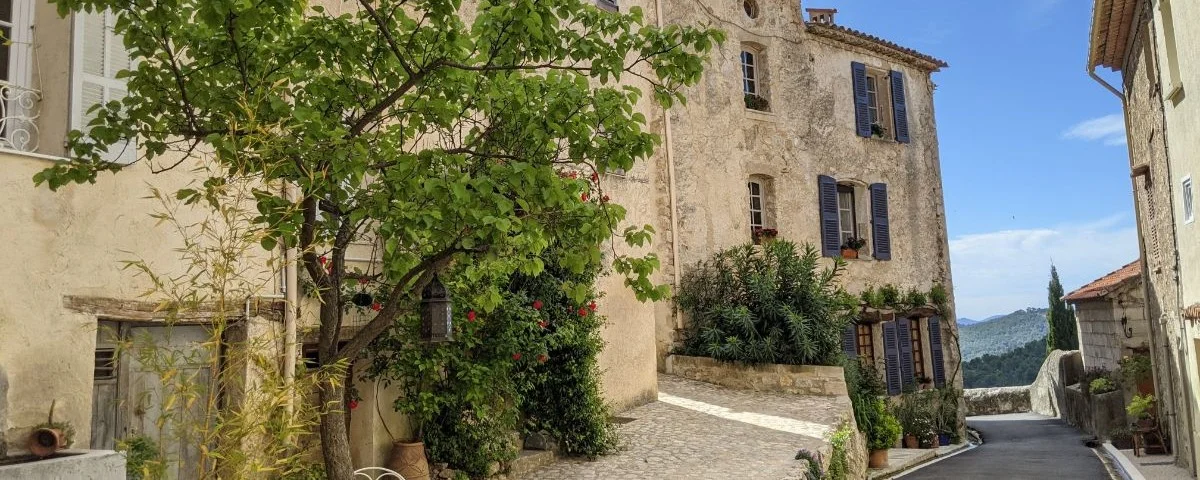
Perched up on its hill, Bargemon is a really pretty village that wins you over straight away with its authenticity and peaceful atmosphere. The remains of its old medieval walls still wrap around a maze of narrow, winding little streets, giving the village an intimate charm that feels almost untouched by time.
Right in the heart of the village, Saint Étienne Church, which dates back to the 15th century, catches your eye with its flamboyant style portal. Inside, you can admire two remarkable sculpted marble heads on the altar, real signs of a refined artistic heritage.
Not far from there, the small chapel of Notre Dame de Montaigu, although it is rarely open, has a strong spiritual presence. For a long time, it was an important pilgrimage site, and it houses a miraculous Virgin statue as well as a magnificent fully gilded baroque altar.
Châteaudouble
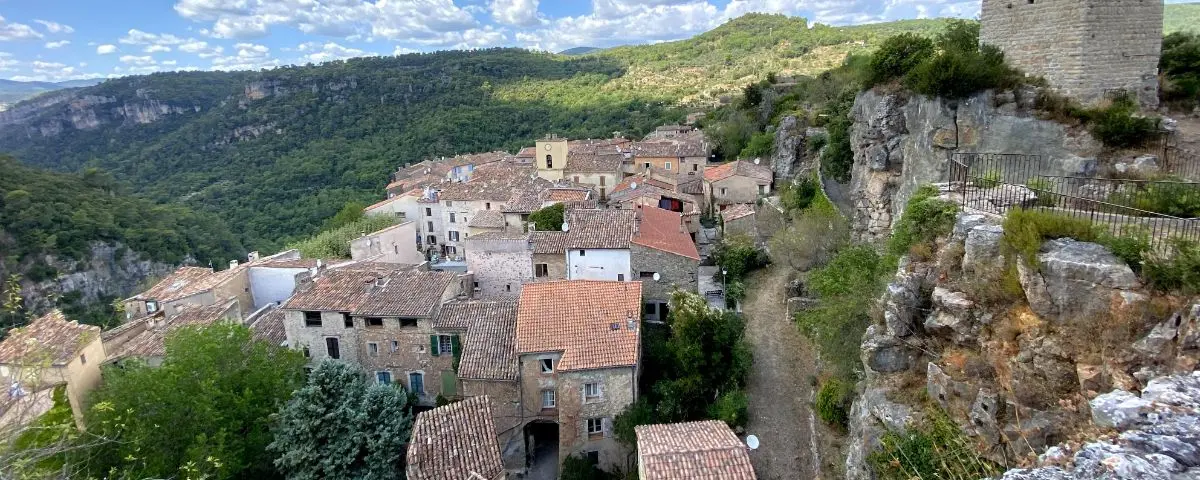
Altitude 500m (1640ft)
Châteaudouble is a tiny hamlet clinging to the cliffside, overlooked by an old watchtower and facing dramatic gorges. It’s a truly remote spot, the road leading there was carved straight into the rock and wasn’t even built until the 19th century. The village keeps a friendly, down-to-earth vibe, especially around the charmingly named Place du Purgatoire.
Tourtour
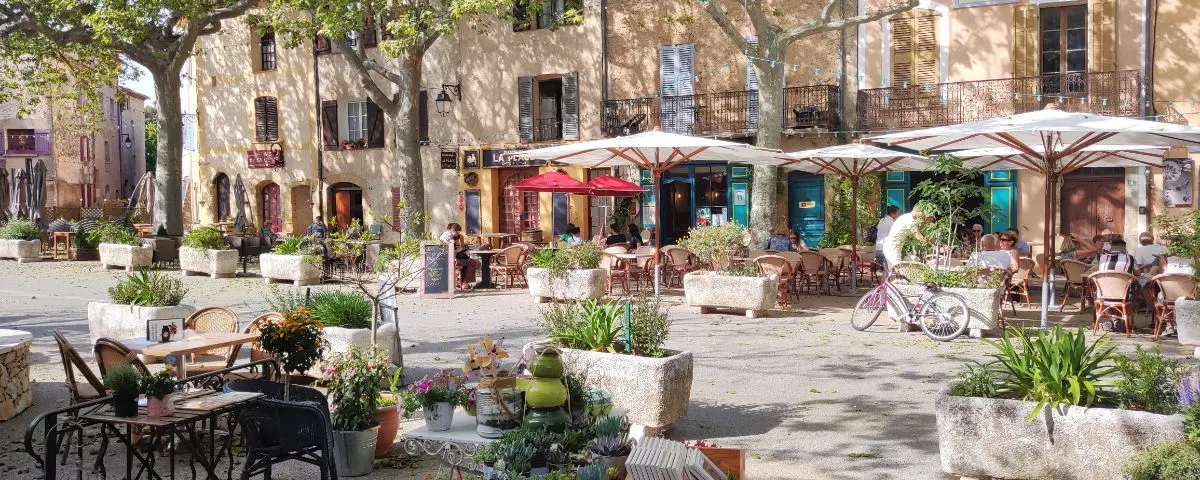
In Our Expanded Picks ☑️
Altitude 640m (2100ft)
Tourtour sits high above a landscape of wooded hills scented with thyme and rosemary. The place draws in both visitors and artists, with several galleries dotted around the village.
The approach alone is stunning, you arrive via a panoramic road that already gives you a taste of what’s to come. Once you’re in the village, it’s all about wandering through Renaissance-style houses with carved facades, cobbled lanes, shady little squares, and softly murmuring fountains.
The old 12th-century castle reminds you of its feudal roots, while the 11th-century Saint-Denis chapel, outside the village, offers an incredible view all the way to the Maures mountains, Sainte-Victoire, and Sainte-Baume.